When I was running Shakes 2GO, I had a loyalty scheme from day one. Paper stamp cards. Buy nine, get one free. Classic. I printed a few hundred, put a stack on the counter, and considered the job done.
It took me embarrassingly long to notice the problem. Customers lost their cards. Found them months later and felt vaguely guilty about not coming in. Staff handed them out but forgot to stamp them. Some customers collected three or four cards simultaneously. And through all of it, I knew almost nothing about who my loyal customers actually were.
I had a loyalty scheme. What I didn't have was loyalty data. Those are very different things.
This is what I wish someone had handed me when I was starting out. A plain-English explanation of digital loyalty cards for independent UK café owners, how they work, and what to look for when choosing one.
Why Independent Cafés Need a Loyalty Scheme at All
Before getting into the how, it's worth being clear on the why. Because "loyalty scheme" can sound like something that belongs to big chains with marketing departments, not a café run by one or two people doing everything themselves.
The economics are simple. Getting a new customer through the door costs money. Getting an existing customer to come back costs almost nothing. But it only happens reliably if you give them a reason.
A loyalty scheme does one thing above all else. It makes your regular customers more regular. Someone who visits twice a week becomes someone who makes sure they visit twice a week, because they're working towards a reward. That shift in behaviour, from habitual to deliberate, is worth significantly more than the cost of whatever reward you're offering.
💡 The Maths of Loyalty
If a loyalty scheme increases your 100 regular customers' visit frequency by just one extra visit per month, and their average spend is £4.50, that's £450 in additional monthly revenue. Over £5,400 per year. From customers you already have. No new footfall required.
Loyalty schemes aren't a nice-to-have for independent cafés. They're one of the highest-return uses of your time and money available. The question is which type of scheme actually works.
The Problem With Paper Stamp Cards
Paper stamp cards are the default because they're cheap, familiar, and simple. Customers know how they work without being told. They're fine. They just have a ceiling. And most independent cafés hit that ceiling without knowing it.
Here's what paper stamp cards can't do.
They can't tell you how many active loyalty members you have. They can't show you which customers have gone quiet. They can't tell you whether your reward is pitched at the right level. And they give you no way to act on any of it, because you have no idea who your customers even are.
Every paper card that walks out of your café is anonymous. You have no idea who's carrying it, where they came from, or whether they'll ever come back. Your loyal customers are invisible to you.
That invisibility has a cost. Not one you feel sharply on any particular day. But it compounds. Every customer who drifts away and comes back less often is a small silent leak in your revenue. You can't fix a leak you can't see.
What a Digital Loyalty Card Actually Does
A digital loyalty card solves the visibility problem by turning your loyalty scheme into something trackable. Every sign-up, every stamp, every reward redeemed is recorded. That data accumulates into something genuinely valuable: a real customer database, built from your own customers, that belongs to you.
That database is the part most café owners underestimate. They think about the convenience of not printing cards, or the novelty of having something on people's smartphones. Those are real benefits. But the database is the one that compounds over time.
With PerQ, you can see exactly how many customers have joined your scheme, how many stamps each one has collected, when they last visited, and how many rewards have been redeemed. You can export that data to a spreadsheet at any point. For the first time, your loyal customers are visible. Not as a vague sense of who comes in regularly, but as actual records with actual visit histories.
💡 Your Database Is a Business Asset
A coffee shop with 300 customers in a digital loyalty scheme has something a coffee shop with 300 paper stamp card holders doesn't: a real exportable customer list. That list tells you who your most loyal customers are, who's gone quiet, and how your scheme is actually performing. Paper gives you none of that.
Why App-Based Loyalty Schemes Don't Work for Most Independents
Not all digital loyalty cards are the same, and the difference matters a great deal for independent cafés specifically. Some platforms require your customers to download a dedicated app, and every extra step between "I'd like to join" and "I'm signed up" costs you members you'll never get back.
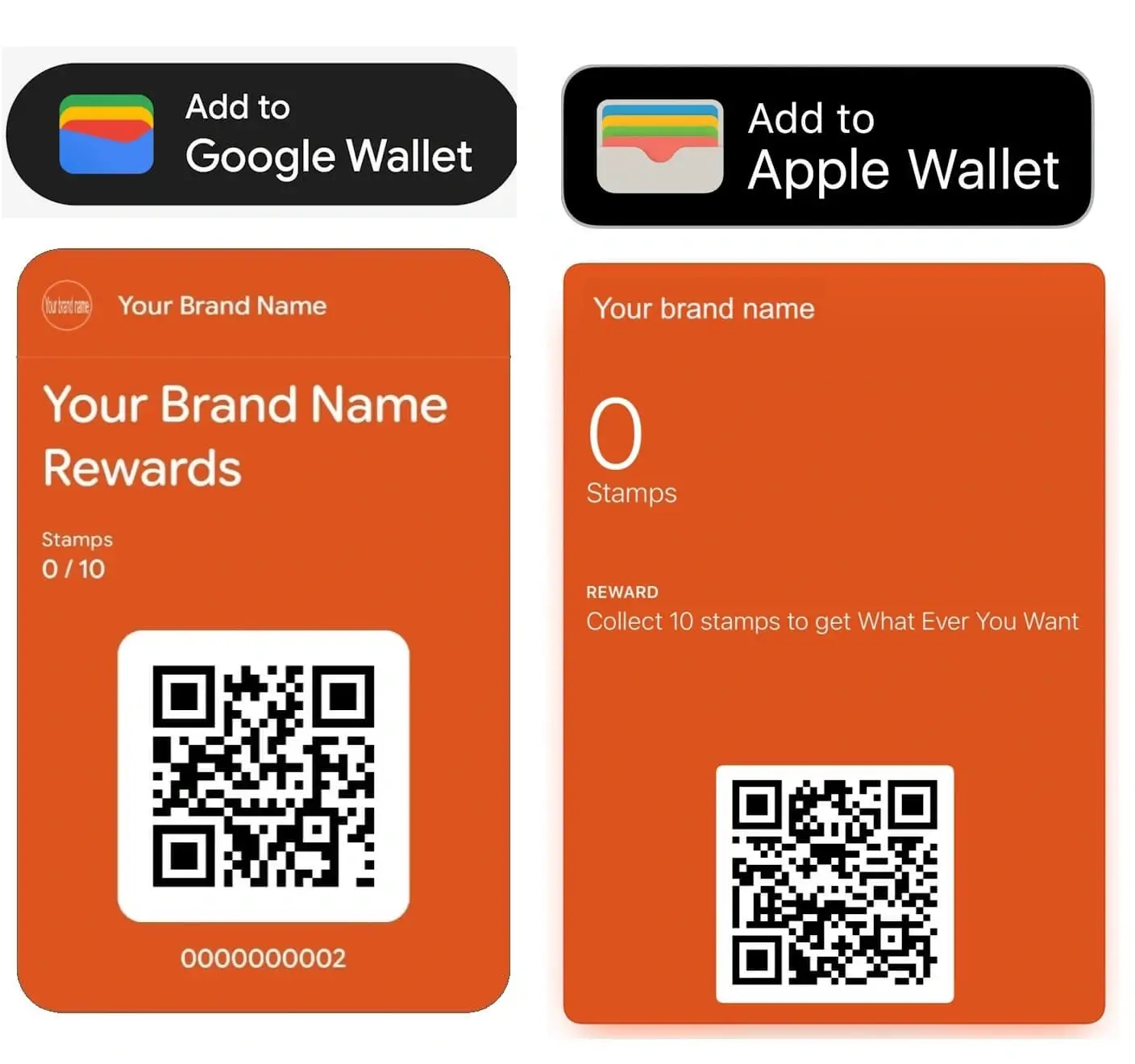
The approach that works is a wallet-based loyalty card, one that lives in Apple Wallet or Google Wallet, already installed on every smartphone in the UK. For the full comparison of app-based versus wallet-based loyalty, including an honest look at platforms like Remy and Stamp Me, see the complete guide to digital loyalty cards in the UK.
How PerQ Works for Independent UK Cafés
PerQ is a wallet-based digital loyalty card built for independent retailers. Cafés, coffee shops, sandwich bars, bakeries. It's what I built after running Shakes 2GO and wishing something like it had existed when I was doing it myself.
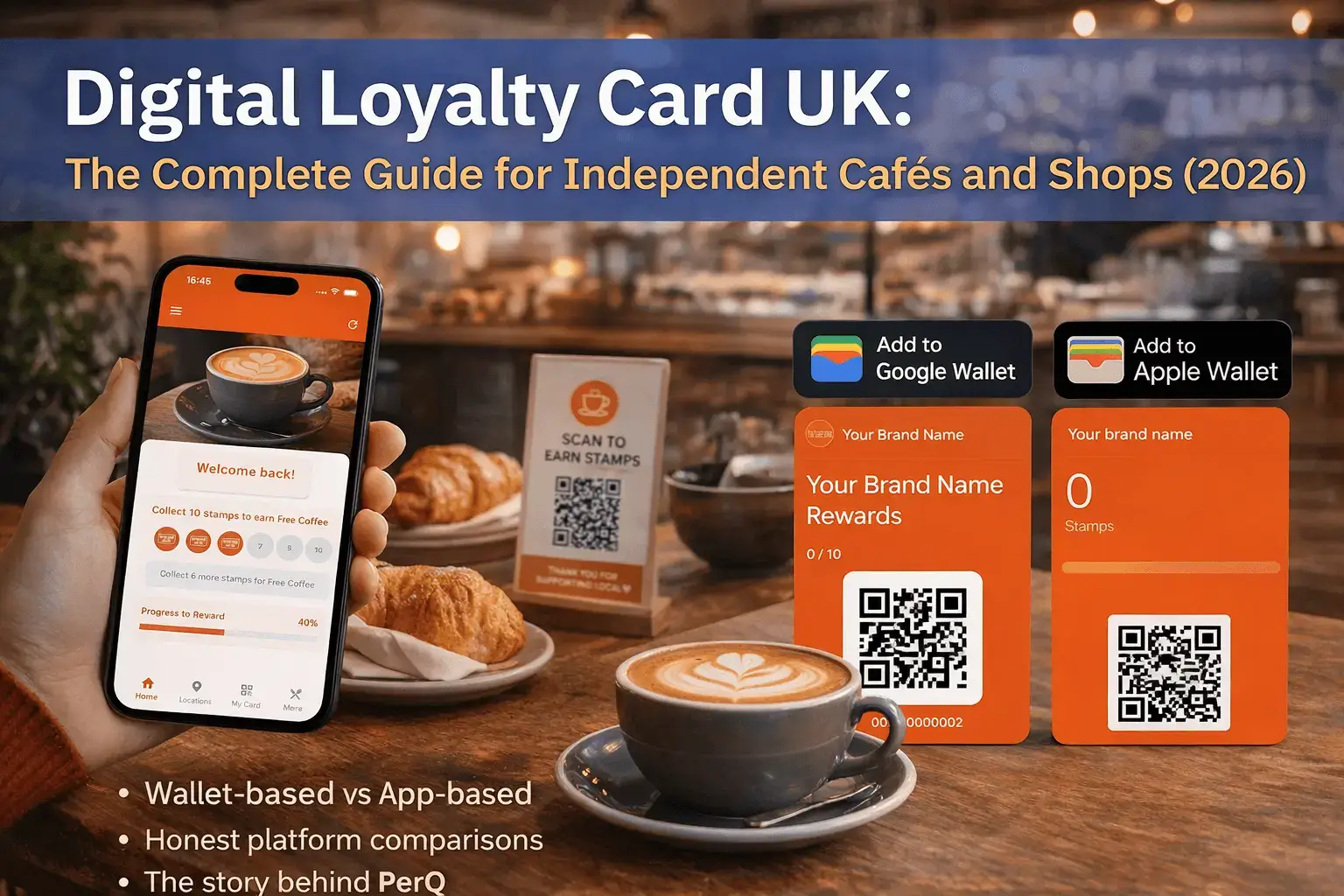
You sign up, customise your card with your logo and colours, and you're live. Customers scan the QR code on your counter, add the card to their wallet, and start collecting stamps immediately. You stamp cards using the free PerQ scanner app on your smartphone or tablet. No extra hardware. Nothing to install beyond an app on an existing device.
Every stamp is tracked. Every sign-up is recorded. Your PerQ dashboard shows you your total customer count, each customer's stamp and reward history, when they last visited, and which platform they're on. You can export the whole list to a CSV at any time. Your database builds itself automatically, every day you're open.
The card lives in your customers' smartphones. When they tap to pay anywhere, their wallet opens and there's your café with their current stamp count. That passive reminder works continuously without you doing anything. It's better than a paper card in a wallet, because their smartphone never gets left at home.
What You Can Do With the Customer Database Over Time
Having the data is the first step. What you do with it is where things get interesting.
With PerQ you can see, clearly and for the first time, how your loyalty scheme is actually performing. How many customers have joined. Which ones collected stamps regularly and then stopped. Whether your reward threshold is pitched at the right level. Which days see the most activity. You can export your customer list and look at it once a month to understand your business better than you ever could from paper.
Most independent café owners have never had a clear picture of who their loyal customers actually are. PerQ gives you that picture from day one.
💡 When You're Ready to Go Further
If you want to give your customers a fully branded loyalty experience with your own named app in the App Store and Google Play, your logo, your colours, and your name on it, that's where PerQ Enterprise comes in. For most independent cafés starting out, PerQ is the right first step. Enterprise is there when you want something that feels entirely your own.
What About Multiple Locations?
PerQ works across multiple locations on a single card. If you have two or three sites, your customers carry one card that works everywhere.
If you're running a larger operation and want a fully branded loyalty experience, your own named app in the App Store and Google Play with your branding front and centre, PerQ Enterprise offers exactly that. It's a white-label loyalty app built entirely around your business, with direct customer communication on top. That's a different product at a different price point, designed for when you want something that feels entirely your own rather than a wallet pass.
For most independent cafés getting started with digital loyalty, PerQ is the right tool. Enterprise is there when you're ready for it.
What Does It Cost. And Is It Worth It?
PerQ is only £12 per month. No setup fee. No long-term contract. No hardware costs beyond a smartphone you already own.
Compare that to paper stamp cards. A run of 500 costs roughly £40 to £80 depending on quality. They last a few months before running out or getting battered. You reprint them. They generate zero data. You have no idea whether they're working. Over a year you've spent £100 to £160 on cards alone, learned nothing, and built no asset.
PerQ costs £144 per year, works on every smartphone in the UK, gives you a real customer dashboard, tracks every stamp automatically, and hands you an exportable database of customers that grows every day you're open. The economics aren't close.
And getting started is low risk. PerQ offers a 30-day free trial with no setup fee and nothing to install beyond a free app.
How to Get Started
If you've been running paper stamp cards and you're ready to upgrade, here's the simplest possible transition.
Sign up for PerQ and set up your digital card. It takes a few minutes. Print or display a QR code at your counter. For the first month, run both. Paper for customers who ask for paper, digital for everyone else. Let the paper scheme wind down naturally as cards get lost, completed, or forgotten. Most cafés are fully digital within six to eight weeks without any forced migration or awkward conversations.
The customers who switch will start building your database from day one. By month three you'll have something you've never had before. A real picture of who your loyal customers are, how often they come, and a foundation you can build your marketing on when you're ready.
That's what a loyalty scheme is supposed to do. Paper got you halfway there. Digital finishes the job.
Start your free 30-day trial — no setup fee, no hardware, cancel any time →