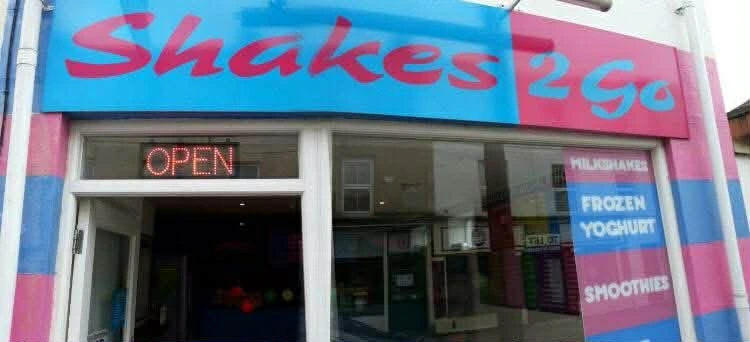
In 2009 I opened Shakes 2GO in Cheltenham. We sold milkshakes to begin with, then added smoothies later on. It took a while to get going but before long it was starting to thrive. We began seeing the same customers come back week after week. Sales dropped off over winter, though never as much as you'd expect, and every spring, at the first sign of decent sunshine, customers would start reappearing who we hadn't seen since the previous September.
I wanted to keep those people. I had spent time and money attracting them in the first place. For the first six months I stood outside in all sorts of weather handing out leaflets. Getting up early to drive into Cheltenham before the shop even opened. Standing at the bottom of the road during quiet moments, pressing leaflets into the hands of anyone walking past. All of that effort to get people through the door. Once they were in and they liked what we did, the last thing I wanted was to lose them.
Getting people through the door is only half the battle. If you want to think about what they see when they arrive, this post on café kerb appeal covers the basics.
Before opening Shakes 2GO I'd spent years working for some of the UK's biggest retail brands. B&Q, Next, Asda, Sainsbury's, Tesco and others. I watched the Tesco Clubcard and Sainsbury's Nectar card grow from the inside. I understood exactly why those businesses ran those programmes. They were expensive to operate but the returns were enormous. Customer data, buying behaviour, direct marketing to people who'd already spent money with you. The big retailers knew precisely who their best customers were and could reach them any time they wanted. Even today you see the same logic at work in businesses like Go Outdoors, where the membership scheme exists primarily to capture customer data. It has always been about knowing who your customers are.
The money is in your customer database. When you have a list of people who've already bought from you, people you can contact and whose behaviour you understand, you can market to them whenever you need to. It works like a tap. Any time you want to increase sales, you turn it on.
When social media took off I created a Facebook page for Shakes 2GO. I didn't even have a website until 2014. I promoted the page, got customers to like it, ran some Facebook ads to attract new followers. I was building my own customer database at almost zero cost. Four thousand likes. A direct line to people who already knew my shop.
Then somebody in California made a decision.
Mark Zuckerberg changed the algorithm. Facebook needed to make money, and the way it was going to make money was through advertising. Businesses using their own pages to reach their own customers for free were a problem. So the algorithm was adjusted. Posts that used to get decent reach started getting almost none. If I wanted my four thousand followers to see what I was posting, I now had to pay for it.
Then more algorithm changes came. Then more money needed to be spent.
I had put real time and effort into building that page. And I gradually came to understand that I didn't actually own any of it. Facebook owned it. I was renting access to my own customers, and the landlord kept putting the rent up.
That's when I decided I needed a proper customer database. One I actually controlled.
So I got in a car, drove to Birmingham, and sat in a modern office asking for a quote to build a customer app for the shop. Nothing complicated. Nothing new or innovative. Something that already existed, with my brand name and colours on it.
The quote came back at over £10,000.
That was the end of that conversation.
So I did what most independent shop owners do. Paper stamp cards. A rubber stamp, an ink pad, and a stack of cards with ten little boxes on them. Fill it up, get a free milkshake.
It worked. Sort of.
Customers liked collecting stamps. But the problems were constant. People would come in with three different half-filled cards. They'd forgotten to bring the right one last time, so they'd started a new one. We'd sit there transferring stamps across. I was forever buying more ink, reordering cards. And when someone finally redeemed their free milkshake and walked out, I knew nothing about them. No name. No way to contact them. No idea how often they actually visited.
I sold Shakes 2GO in 2016 to a lovely lady. Despite expanding it to include a second location, she unfortunately had to close it in 2021. Covid finished off a lot of good independents.
Those problems I'd lived with for seven years stayed with me. Because nothing had changed for the shops that were still open. The big chains were getting smarter. The independents were still using stamp cards.
I'm not a tech person by background. I'm a retail person who taught himself to code. I built Retail Geek and PerQ because I couldn't find what I was looking for at a price that made sense for an independent business.
This is what I wish I'd had at Shakes 2GO.
What is a digital loyalty card?
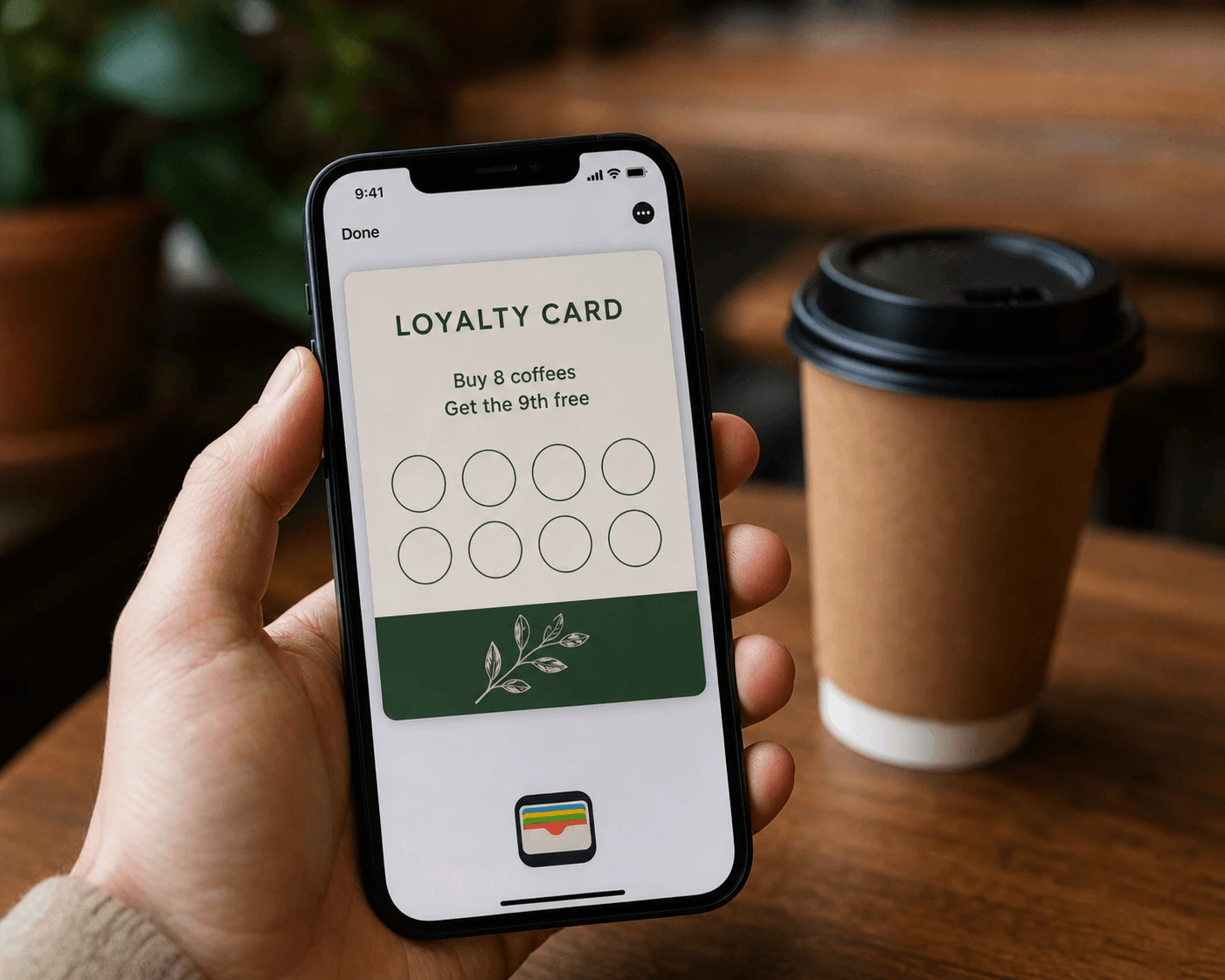
A digital loyalty card UK businesses can actually use works the same way a paper stamp card does. Customers collect stamps or points, reach a target, and claim a reward. The difference is it lives on their phone.
The card travels with them everywhere. They can't leave it at home or lose it down the back of a sofa. You don't run out of ink or reorder stock. And nobody turns up at the counter expecting you to combine three half-filled versions into one.
There's a broader shift behind this worth understanding. Most of your customers have already stopped carrying a physical wallet. They pay with their phone. The leather bi-fold that used to hold your loyalty card is sitting in a drawer at home. We wrote about what that means for independent retailers in more detail here: If Your Customers Have Stopped Carrying a Wallet, Where Does That Leave Your Loyalty Card?
There are three main types of digital loyalty card available to UK businesses in 2026. The difference between them matters more than most people realise before they sign up for something.
App-based vs wallet-based: why it matters
The first is a fully branded app with your own name, your own colours, your own presence in the App Store and Google Play. That's what PerQ Enterprise is. The second is a wallet-based card that lives in Apple Wallet or Google Wallet, with no app download required. That's PerQ. The third is a shared platform app, something like Remy or Stamp Me, where customers download the platform's app and your shop is listed alongside dozens of other businesses, including your direct competitors.
That third option is worth thinking about carefully. When a customer downloads Remy, they are downloading Remy. They know it works across multiple businesses. Your shop is one listing among many. Remy has a discovery feature built in, designed to show customers other local businesses nearby, including businesses just like yours. The customer data sits on Remy's platform, not yours. You can see your own customers' activity through your merchant dashboard, but the underlying data belongs to the platform. You are building your loyalty scheme on someone else's land.
App-based loyalty of any kind requires your customers to download a dedicated app. Most people will not download an app for a single café or shop they visit once or twice a week. Phone storage matters. Home screens matter. Unless you're Costa or Starbucks, you're asking customers to do you a favour before they've even collected their first stamp.
There is a case for a dedicated branded app. It works best for retailers with multiple locations who want their own name in the App Store, their own customer database, and a direct marketing channel they fully own. For that kind of operation, a branded app makes sense, and that is exactly what PerQ Enterprise is built for. For a single-site independent, the download barrier costs you sign-ups before you've even got started. That's where PerQ comes in.
Wallet-based loyalty works differently. Your loyalty card lives in Apple Wallet or Google Wallet. The same place customers keep their bank cards, boarding passes and train tickets. Every iPhone and Android phone already has these apps installed. Customers scan a QR code and the card appears in their wallet in seconds. No download. No account creation.
The adoption difference is real. Wallet-based cards get saved because the barrier is almost zero. App-based cards get ignored because downloading something feels like a commitment most customers aren't willing to make for a free coffee.
What to look for in a digital loyalty card UK businesses can actually use
No app requirement for customers. Wallet-based is the standard worth aiming for with single-site independents. If customers have to download something, a large chunk of them simply won't bother.
Transparent pricing. Understand exactly what you'll pay before you sign up. Some platforms have low headline prices but add charges for notifications, extra locations, or premium features. PerQ is only £12 per month. No usage charges, no hidden fees, no surprises.
If you're thinking about how a loyalty card fits into the bigger picture of keeping customers coming back, this article covers the full picture: How to Get More Repeat Customers in an Independent Coffee Shop.
UK-based or UK-focused. A lot of loyalty platforms are built for the US market. Check for GBP pricing, GDPR compliance, and support that works for UK business hours.
Setup you can do yourself. You should be able to create your card, set your reward structure, and generate a QR code in under an hour. No developer needed.
The best digital loyalty card options for UK independent businesses
PerQ is a wallet-based digital loyalty card built for independent UK retailers and businesses. Customers add it to Apple or Google Wallet in about ten seconds by scanning a QR code. No app download needed. Pricing is only £12 per month. Setup takes under an hour. Built and supported in the UK. It works for any business where customers come back regularly: cafés, coffee shops, takeaways, pizza places, kebab shops, fish and chip shops, hairdressers, barbers, nail salons, tanning salons, dog groomers and independent retailers of all kinds. When customers join, they leave their name and mobile number, so from that first scan you're building a real contact list you actually own.
For retailers operating across multiple locations who want a fully branded app under their own name in the App Store and Google Play, PerQ Enterprise is the white-label option. Your branding, your customer database, your direct marketing channel. Built for small chains and multi-site operators who want the same setup the big brands use.
Remy Rewards is a UK-based loyalty platform with a genuine focus on the independent sector. It has a solid feature set and good support. The main limitation is that it's app-based. Customers need to download the Remy app to collect stamps. For businesses with a tight-knit regular customer base who'll make the effort, it works well. For higher-footfall businesses with more casual customers, the download barrier costs you sign-ups.
Stamp Me offers a free entry-level plan, which makes it worth a look if budget is the main concern. It's also app-based. The free tier is limited, and the paid plans add up once you factor in the features you actually need. Useful as a starting point, less so as a long-term solution.
Why I built PerQ after running Shakes 2GO
When I built Retail Geek, I started with the problems I'd actually lived with for seven years: lost cards, multiple half-filled cards people expected me to honour, and the complete absence of any data. When someone redeemed their free milkshake and walked out, I knew nothing about them.
PerQ solves that. Every customer who joins leaves their name and mobile number, so you build a real contact list from day one, one you can reach directly whenever you need to drive footfall. For the full story of what led me to build it, including what happened when Facebook changed its algorithm on me, see the independent café owner's guide to digital loyalty cards.
Here's exactly how PerQ works
Sign up and you get your unique merchant QR code. A customer scans it, their loyalty pass drops straight into their Apple or Google Wallet, and they're collecting stamps within ten seconds. No app download, no account, no waiting around.
For the full walkthrough of what happens after that first scan, including how staff record stamps and hand out rewards, see the independent café owner's guide to digital loyalty cards.
Most businesses are live within a few hours of signing up. Some do it in a lunch break.
Ready to try it? Start your free 30-day trial at retailgeek.co.uk. No credit card needed →