Here's a number worth sitting with. A client who comes in every four weeks and spends £30 a visit is worth £390 a year to you. Lose her, and you haven't lost one appointment. You've lost £390, every year, for as long as she'd have kept coming.
Most salon owners never do that maths. They notice a face has gone missing eventually, shrug, and assume she moved house or went off nails altogether. Usually she didn't. She just didn't rebook one time, and nobody reminded her to.
The Three-Week Gap Nobody's Watching
A nail salon isn't a café. Your clients aren't in every day, they're in every three to five weeks, and that gap is exactly where the damage happens. Life gets in the way. A holiday, a busy fortnight at work, a school half-term. Three weeks becomes six. By the time she thinks about it again, her nails have grown out, she's stopped noticing, and whichever salon she walks past first on a Saturday gets the booking instead.
You never find out why. You just quietly stop seeing her.
Compare that to a barber or a hairdresser. A bad haircut is visible. Someone will comment on it, and that social pressure nudges people back into the chair on schedule. Nails don't work that way. There's no moment where a friend says "your gel's looking rough, when did you last get them done?" The habit just fades, silently, and you're the one who pays for it.
You Can't Fix What You Can't See
Ask most salon owners how many active clients they have and you'll get a guess. Ask how many haven't rebooked in six weeks and you'll get a blank look. That's not a criticism. It's just what happens when your only record of a client is a name in an appointment book and a stamp card in a drawer somewhere.
A paper loyalty card makes this worse, not better. It tells you a client is three stamps from a free set. It tells you nothing about when she last walked through the door, and it gives you no way to reach her even if you noticed she'd gone quiet. The card itself usually goes missing before either of you find out.
💡 The Real Cost of a Missed Rebooking
One client, lost quietly, at £30 a visit every four weeks, is £390 a year. Ten clients like that is £3,900. Most salons are leaking exactly this kind of money and calling it a quiet month.
What a Digital Loyalty Card Actually Fixes
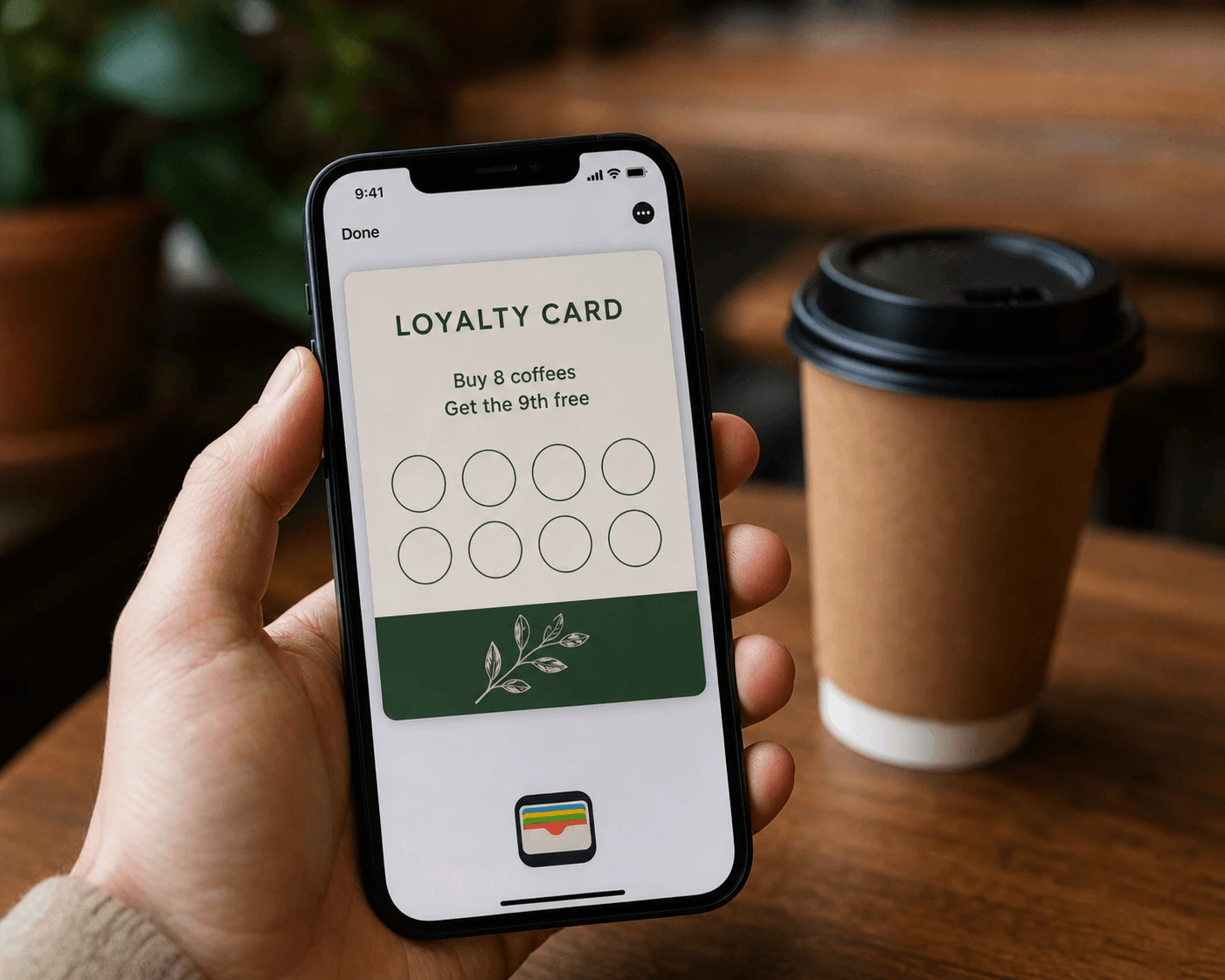
A digital loyalty card solves a completely different problem than a paper one, even though it looks similar on the surface. The stamps still matter, but the part that actually changes your business is what happens when a client signs up. She types in her name and mobile number before the card lands in her Apple Wallet or Google Wallet. No app. No password. Ten seconds at your desk.
From that point on, she's not an anonymous face who might come back. She's a number in your dashboard, with a visit history attached to it.
That's the entire difference. Not the stamps. The number.
The One Text That Pays For Itself
Here's what that number is actually for. Five weeks after her last visit, before the gap turns into six or seven, you send her a text. Nothing clever. "Due a fresh set? We've got a slot Thursday at 2pm." Thirty seconds to write. A few pence to send.
Text messages get opened at around 95%, most within three minutes. Compare that to a Facebook post that reaches four people if the algorithm's feeling generous. If you send that reminder to fifty clients who are due back and even ten of them rebook at £30 a visit, that's £300 from a message that cost you less than the price of a bottle of nail varnish.
Run that every month, for every client sitting in that five-to-six-week gap, and you're not hoping people remember you. You're reminding them, on schedule, before they've had the chance to forget.
The Gaps That Cost You Every Week
Rebooking reminders solve the slow leak. There's a faster one too. A cancellation two hours before an appointment leaves a chair empty and a slot you can't sell twice. Text your list. "Got a 2pm gap today, who fancies a treat?" Someone who'd been meaning to book takes it within minutes, and a chair that would have earned nothing is earning again.
Neither of those things happens by accident. They happen because you had a list, and you used it.
Building the Calendar Into It
Once you've got names and numbers, the same list earns you money at the moments that matter to your clients emotionally, not just practically. Christmas parties. Valentine's Day. Prom season. Wedding season, where one bride's list of bridesmaids is a whole morning's booking in one message. Mother's Day gift vouchers, sent two weeks before anyone's thought to buy one. Every one of these is a text away instead of a hope that someone remembers you exist when the occasion comes round.
How Many Stamps Should You Actually Ask For?
Get this wrong and the card does nothing. Ask for too many visits and clients lose interest before they're halfway there. Ask for too few and you're giving away treatments you didn't need to.
For most salons, somewhere between five and eight visits works well. At a typical four-week rebooking cycle, that's six months to a year before someone earns a reward, close enough to feel worth chasing, far enough that it isn't costing you a free set every other month.
Will Clients Actually Sign Up?
Almost always, if you ask properly. Leave a QR code sitting on the desk and you'll get a trickle of sign-ups from people who notice it themselves. Have whoever's on the desk say "want a loyalty card, you get a free set after six visits" while she's paying, and you'll get most of the room.
She's already sitting there. She already likes what you do enough to be a repeat client. The card is an easy yes, provided somebody actually offers it to her.
Setting It Up
PerQ takes a few minutes to set up. You get a branded digital stamp card that works in Apple Wallet and Google Wallet, a sign-up flow that captures name and mobile number, and a dashboard that shows you exactly who's due back and when. £12 a month, flat, whether you've got fifty clients on there or five hundred. SMS credits for sending reminders are bought separately, so you only pay for the messages you send.
If you want the fuller picture of how PerQ fits a salon specifically, including how it handles occasion bookings and cancellation gaps, we've built a dedicated page for nail salons here.