Yes. That is the short answer. The longer one involves a milkshake shop in Cheltenham, a question I kept hearing from café owners on the road, and some numbers that surprised me when I first saw them.
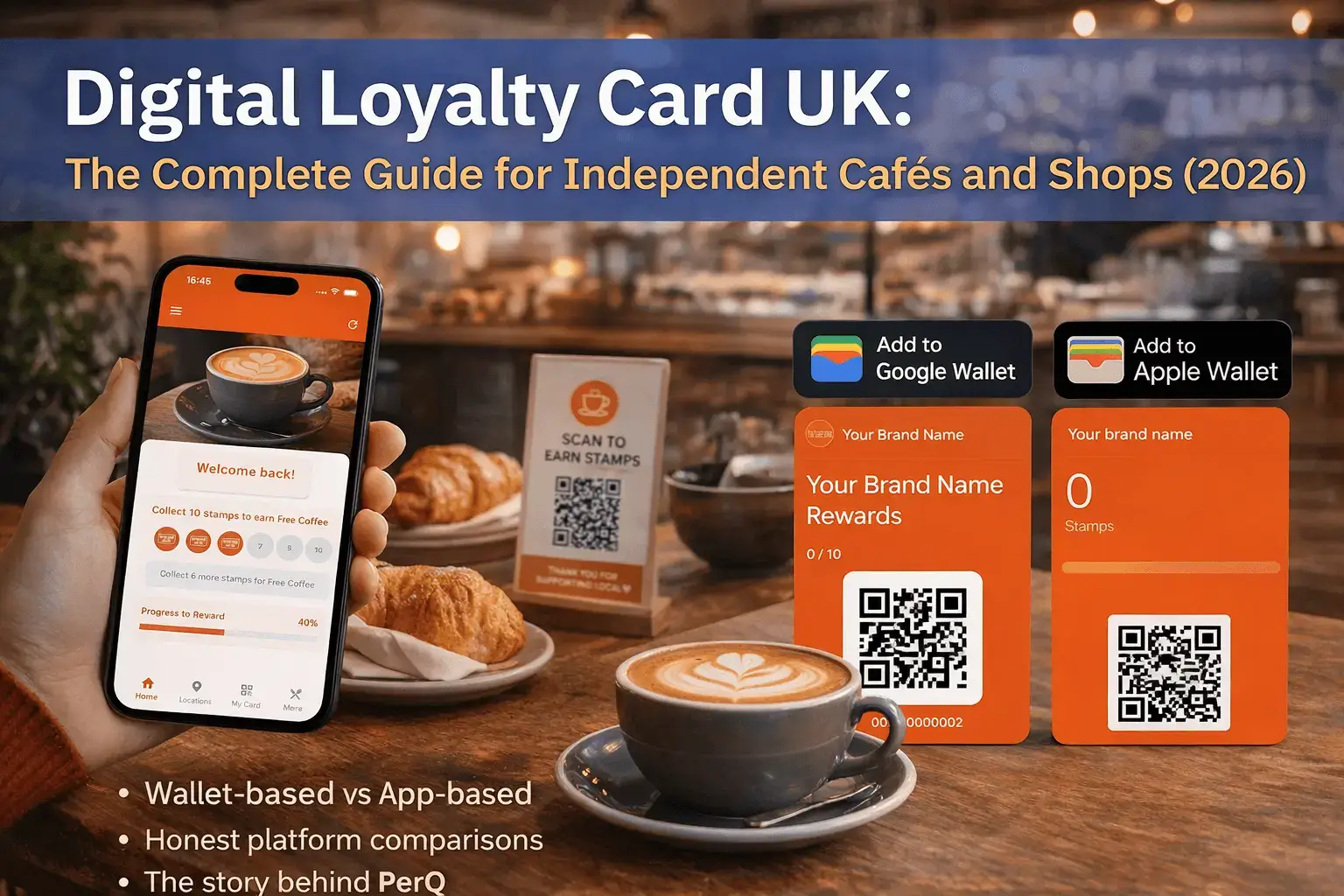
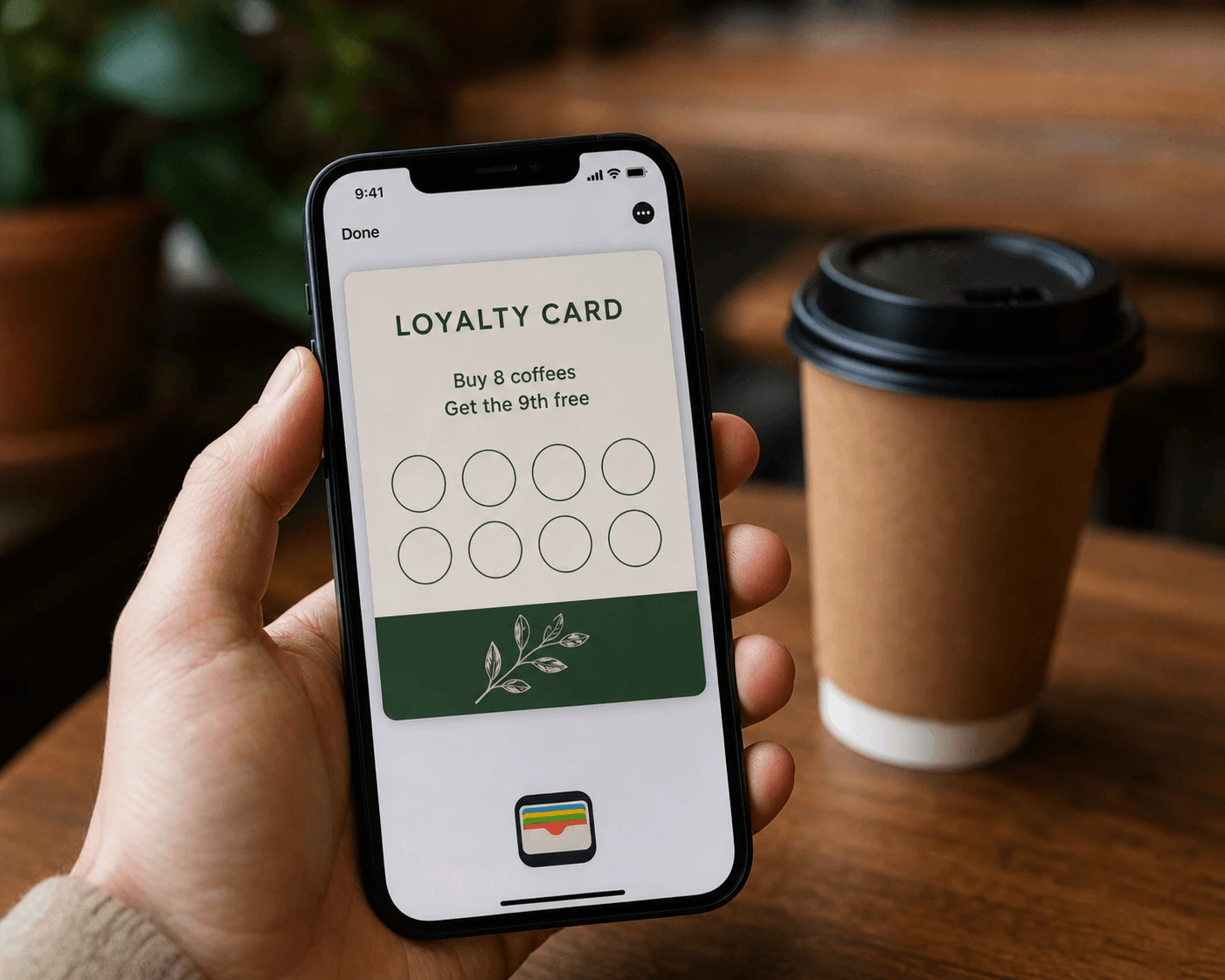
A digital loyalty card is a stamp card stored on a customer's phone through Apple Wallet or Google Wallet, with no app download required. It works the same way as a paper stamp card, except it is always on the customer's phone rather than forgotten on the kitchen counter.
The scepticism is understandable. Paper stamp cards have been around forever and most customers have a drawer full of them that never came back. So when someone suggests replacing them with something digital, the instinct is to wonder whether customers will bother. Whether it is too much friction. Whether people are really going to pull out their phones just to collect a stamp.
They are. And the reason comes down to something simple.
The Card That's Always There
The problem with paper loyalty cards is not the loyalty part. It is the card part. Customers genuinely want to collect stamps and earn a free coffee. They just don't carry a dedicated card for every shop they use. Life is busy. Wallets are full. The card sits on the kitchen counter or at the bottom of a bag and the next time they're standing at your counter they shrug and say "sorry, I forgot it."
A digital loyalty card lives on their phone. Not in an app they have to download and remember to open. On the actual phone, in Apple Wallet or Google Wallet, sitting alongside their contactless payment and their train tickets. The things they already access every single day.
When the card is always present, it gets used. That is not a theory. It is just how people behave.
What I Saw When I Ran Shakes 2GO
I ran a milkshake and smoothie shop. We used paper stamp cards. Handed them out, watched customers stuff them in pockets, and waited. Some came back and redeemed. But I never knew how many had simply lost the card, forgotten it, or drifted off without me ever knowing why.
That invisibility is the real cost of paper. Not the printing. The fact that once a customer walks out the door, they're gone and you have no idea whether they're coming back. No data. No way to follow up. No way to know if your loyalty scheme is actually working or just generating a pile of half-stamped cards somewhere across Cheltenham.
The "I'll Just Remember" Problem
A lot of independent café owners run an informal loyalty system. They know their regulars. They'll throw in a free coffee every now and then, keep a mental note of who deserves a treat. It works, up to a point.
The point it stops working is the moment you're not there.
Take a day off and your member of staff has no idea which customers are due what. Go on holiday for a week and the whole thing pauses. Start thinking about hiring more staff, opening earlier, or eventually running a second site, and an informal system built entirely in your head becomes a liability rather than an asset.
💡 The Case for a Formal System
A formal loyalty system, even a paper one, is better than nothing. It means the scheme exists independently of you being behind the counter that day. A digital one is better still, because it works the same whether you're there, your Saturday staff member is covering, or you're sitting at home finally working on the business rather than in it.
Do Customers Have to Download an App?
Most of the hesitation café owners have about digital loyalty comes from imagining customers being asked to download an app. That's a fair concern. Ask someone to download an app in a busy queue and you've lost them.
PerQ works through Apple Wallet and Google Wallet. There is nothing to download. A customer taps a QR code, it adds a digital stamp card to their phone, and they're done in about ten seconds. The next time they visit, the card is already there. They open their wallet, the stamp updates. That's it.
The friction is lower than paper. There's no card to forget. No fumbling. No "sorry, I left it at home."
Will Coffee Shop Customers Actually Switch to Digital?
When café owners ask whether customers will actually use a digital loyalty card, what they're often really asking is whether it is worth the change. Whether it will cause confusion at the counter. Whether the regulars will resist something new.
In practice the transition takes about a week. Staff mention it naturally when a customer pays. A QR code on the counter does a lot of the work quietly. Within a few days it becomes routine. Within a few weeks the customer base has largely shifted over.
The ones who resist, who genuinely do not want anything digital, are a small minority. You can keep a paper card for them. But you probably already know who those customers are.
💡 On Older Customers
The assumption that older customers won't engage is not borne out in practice. Once the process is demonstrated at the counter, most customers of any age find it straightforward. The barrier was never the technology. It was just showing people it was there.
Frequently Asked Questions
Do customers actually use digital loyalty cards or do they ignore them?
A loyalty card that lives on a customer's phone is one they always have with them. A paper card left on the kitchen counter cannot bring anyone back. The practical difference shows up quickly once a café switches over.
Do customers need to download an app to use a digital loyalty card?
Not with wallet-based systems like PerQ. The stamp card is added directly to Apple Wallet or Google Wallet through a QR code scan. No app download is required, which removes the single biggest barrier to customer adoption.
What kind of customers use digital loyalty cards?
The full range. The assumption that older customers won't engage is not borne out in practice. Once the process is demonstrated at the counter, most customers of any age find it straightforward. The customers most likely to engage are your regulars, since they already have a reason to collect.