When I opened Shakes 2GO in Cheltenham, I made myself a promise. I was going to take the best bits of the big chains and combine them with the best bits of being independent. Get that right, and you'd have something neither side could touch.
Most independent café owners I speak to assume the chains win because of their marketing budgets. They're wrong. The real reason people go to Costa and McDonald's and Starbucks has nothing to do with exceptional quality. The British psychologist Rory Sutherland nails it. People go to chains not because they're amazing, but because they're not shit. You know what you're getting. Whether you order in Stevenage or Scunthorpe, that flat white tastes exactly the same.
I found this out for myself. After finishing university I went backpacking and ended up in New Zealand with a group of guys from New York. They took me to Starbucks. I ordered my first ever flat white. From that moment on, in every new city I visited, I'd seek out a Starbucks and order the same thing. Wellington, Christchurch, Sydney, Brisbane, Darwin, Singapore, Kuala Lumpur, Bangkok. Same drink every time.
That became the bedrock of everything I built at Shakes 2GO. And it's the bedrock of every independent café that manages to build a genuinely loyal customer base.
But consistency alone won't do it. There are four things that work together: consistency, product quality, customer service, and a loyalty scheme. Most independents get the first three roughly right. The fourth is where the real money gets left on the table. Particularly now that a digital loyalty card requiring no app download at all has become an option well within reach of a single-site café on a tight budget.
Here's how all four fit together.
Does consistency actually bring customers back?
Yes. More than almost anything else.
Consistency means your customer knows what they're walking into before they push the door open. It means no more Steve's coffee on Tuesday tasting brilliant and John's on Friday tasting like dishwater. You get there through proper staff training, and there really is no shortcut.
At Shakes 2GO I built a training programme with five levels: Induction, Bronze, Silver, Gold and Platinum. Each one covered specific skills. Induction handled the basics of joining the company. How to call in sick, how holidays worked, what was expected from day one. Bronze took on customer-facing skills. Taking orders, using the till, handling card payments, greeting people properly. By the time a member of staff reached Gold and Platinum they could run the shop independently.
Every level had a multiple choice assessment. Nobody moved up until they'd passed it. We kept a training matrix on the wall with every staff member's name across the top and every level down the side, with the date they completed each one written in. New starter joins on a Monday? By Wednesday they know exactly where they stand and what comes next.
We trained staff to repeat orders back to customers. We trained them to say the amount of cash out loud when someone paid. We scripted exactly how to greet people, how to call out finished orders, how to handle a complaint. It sounds rigid. It isn't. Think of an airline pilot going through a pre-flight checklist with the co-pilot reading back each item. Rigid process produces consistent results. That's the whole point.
Once the training is done, test it. A mystery shopper service doesn't need to be expensive or formal. Friends and family work perfectly well, as long as your staff don't recognise them. Pay for their visit and hand them a checklist covering every standard in your training manual. Did the staff member smile? Make eye contact? Were they in the correct uniform and was it clean? Was the order repeated back? Was the table wiped down before the customer sat? Was the chair clean? Every single thing you've trained your staff on needs to be on that list, because what gets measured gets maintained.
Then share the results. Don't file them away somewhere and forget about them. Put them on the wall. Create a leaderboard. Let staff see how they compare. Reward the winner. An extra day off, first pick of the following week's rota, a gift card. It doesn't need to be expensive. Recognition costs almost nothing and the drop in standards that comes from ignoring performance costs a great deal more.
Is your product actually good enough to bring people back?
This is the uncomfortable question. Your friends and family will tell you your coffee is the best they've ever tasted. They love you and they don't want to hurt you. So they lie.
Innocent Smoothies started on a market stall. Next to their stand they placed two bins, one marked Yes and one marked No. Every customer who bought a smoothie was asked a single question: should we give up our jobs to make smoothies full time? The Yes bin filled up. A few years later they sold to Coca-Cola. They got honest feedback before they'd spent a penny on branding.
Do the same thing. Find two or three friends who genuinely care about coffee. Not friends who'll tell you what you want to hear. Sit down together and build a scoring framework. What makes a great flat white? What does excellent café service actually look like? Use that framework and go and visit every serious competitor within a reasonable distance. Sit in their cafés. Buy their coffee. Score everything honestly.
If you come out on top, good. Now make it official. Pull together a local judging panel. A journalist, a radio presenter, the captain of the rugby club, whoever carries weight in your town. Invite competitors to take part. Set clear criteria, run a proper competition, and let the best café win. Win it yourself and you've got something genuinely worth talking about.
Then go bigger. Enter regional and national competitions. My local fish and chip shop has won the national fish and chip award multiple times. There is a competition for every type of food business. Find yours and enter it. Winning one of those awards does more for repeat visits and word of mouth than almost any marketing campaign you could run.
Being the best is the one thing an independent can do that a chain structurally cannot. A chain is consistent everywhere. You can be the best café in your town.
What does great customer service actually look like day to day?
Simpler than most people imagine. Say hello. Make eye contact. Smile. Be genuinely warm with the customers who want a chat, and leave alone the ones who don't. Read the room.
Reliability matters just as much as friendliness. Display your opening hours clearly. In the window, on your website, and on Google. Make sure all three match. Then stick to them. Don't close at quarter to five because you want to get the cleaning done. Don't turn the coffee machine off at five to. If you open at eight, be open at eight. If you close at five, close at five.
At Shakes 2GO we trained staff that they were open until 6pm and that if a customer came through the door at 6.02 they were to be served without question. One evening, just as we were getting ready to leave, I noticed a family in a car driving slowly past, peering hopefully through the window. We waved them in. They'd driven from Cirencester. They were absolutely delighted and they left us glowing reviews on both TripAdvisor and Google. I'd bet everything they told a dozen people about it. That extra fifteen minutes cost us nothing. You simply cannot buy that kind of goodwill.
And something will go wrong at some point. It just will. No defensiveness, no excuses. Apologise straight away, offer a refund, make it again. How you handle the mistake matters far more than the mistake itself.
Let me give you an example from Shakes 2GO. We sold Kinder Bueno milkshakes. If you've ever opened a Kinder Bueno, you'll know that inside the outer packaging each bar has its own thin transparent plastic wrapping. We used to store them in a tub with those inner wrappers still on, and when making the shake a staff member would unwrap each bar before dropping it in the blender.
About twenty minutes after one customer left, I received a photo on my phone. There was a piece of clear plastic inside their milkshake. I was mortified.
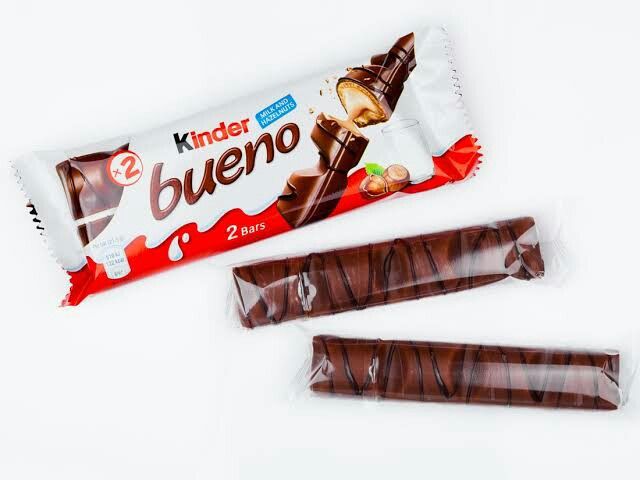
I responded immediately. Full refund, no question. A fresh shake made for free whenever they wanted to come back. I told them we'd investigate what happened and would let them know what we found. They were in Winchcombe that day and said they'd come back next time they were in Cheltenham.
That night after we closed, the team went through everything. Our best guess was that a piece of that transparent inner wrapping had stuck to the inside of the blender jug and gone unnoticed in the rush of a busy service. We talked it through as a team. We were a democratic dictatorship, with me as the dictator, but I always wanted input from the people actually doing the job. The decision we landed on was to store all the Kinder Buenos completely unwrapped in an airtight container, so there was no packaging anywhere near the blender.
Then I went back to the customer. I explained exactly what we thought had happened, what we'd changed as a result, apologised again, and reminded them that a full refund and a free shake were waiting whenever they came back.
💡 How to Handle a Complaint
Respond fast, take responsibility, fix the process, and go back to the customer with the outcome. Get that right and you'll often end up with a more loyal customer than you had before it happened.
Why does a loyalty scheme increase repeat visits?
Consistency, quality and service bring customers back. A loyalty scheme makes them come back faster and more often. Think of it as the icing on the cake.
There's a reason it works beyond just the free drink at the end. People are competitive, even with themselves. Behavioural scientists call it the endowed progress effect. A study published in the Journal of Consumer Research gave one group of customers a blank ten-stamp loyalty card and another group a twelve-stamp card with two stamps already filled in. Both groups needed ten more stamps to earn their reward. The group with the head start completed the card significantly faster. The card felt like an unfinished game. Nobody likes leaving a game unfinished.
The fancy word for this is gamification. It simply means applying the mechanics of a game, things like points, levels, rewards and progress, to something that isn't actually a game. Starbucks understood this long before most. Their loyalty programme doesn't just give you a free coffee after ten visits. It gives you Stars, and those Stars unlock Gold status, and Gold status makes you feel like a preferred customer rather than just another person in the queue. Costa does the same. So does every major supermarket with a points card. They've all spent serious money understanding one simple truth: people will change their behaviour to complete a game, earn a reward, or reach the next level.
You don't need a Starbucks budget to use the same psychology. A ten-stamp card is a game. A digital loyalty card that shows a customer they're two stamps away from a free flat white is a game. The customer who was going to try the new place down the road this Friday will probably come back to you instead, just to finish what they started.
That psychological pull exists whether the card is paper or digital. The Tesco Clubcard works on the same basic principle as the stamp card behind your counter. But for independent cafés in the UK, the gap between running a paper scheme and a digital loyalty programme is bigger than most owners realise. It comes down to one thing: data.
What does a digital loyalty card give you that paper never can?
Imagine you're a dairy farmer. You make your living from milking cows. But you don't actually have a farm yet. No field, no fences, no barn. The cows are wandering all over the countryside, through towns, past other farms, sometimes past you.
Every so often one wanders close enough for you to milk it. Great, you get some milk for the day. But you never know which cows will show up, when they'll come, or whether they'll ever come back. Some you recognise. Most you don't. Once they wander off, there's no way of calling them back.
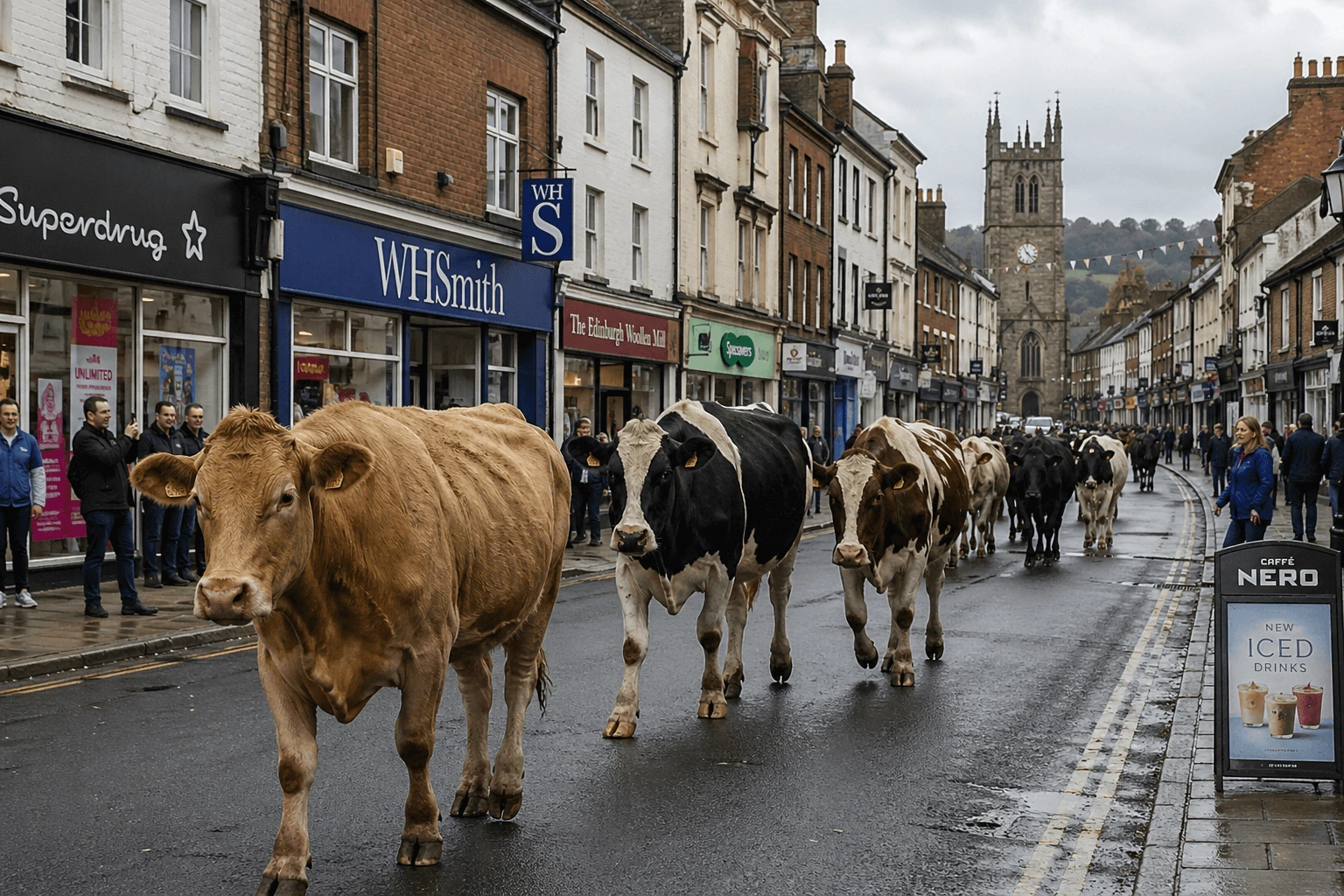
You can't plan how much milk you'll have tomorrow, next week, or next month. And because you can't plan, you can't make butter or cheese or yoghurt. You can't grow.
A good farmer has their own herd, in their own field, with strong fences. They know every cow by name. They can milk them whenever they want. They have a steady, predictable supply and that supply can be turned into new products and more profit.
So how do you get from wandering cows to your own healthy herd?
First, you put names to the cows. You brand them. Not with a hot iron, but with something far friendlier. Their name, contact details, maybe even their birthday. Once you know who they are, you can call them back when they wander off.
Second, you build your field. You make it attractive. Good grass, a warm barn, shelter when it rains, somewhere they genuinely enjoy being. They stop wandering in occasionally and start staying. They become your cows.
In business terms the cows are your customers. The field is your loyalty programme. The branding is collecting their name, phone number and birthday so you can recognise them, talk to them and invite them back.
With a paper stamp card you're still a farmer with no field. You hand out stamps but you have no idea who the card belongs to. If they stop coming you can't contact them. If someone visits every single day you can't even thank them properly. It's just milk slipping through your fingers.
A digital loyalty card changes that completely. Every customer who joins gives you their details. Fill in a birthday and they get a free drink. Add a phone number and they get an extra stamp. They give you something valuable, you give them a reward. Everyone wins.
Now you know who your customers are, how often they visit and when they've gone quiet. You can send a text with a flash offer on a quiet Tuesday. You can let your entire customer base know you're open on a bank holiday Monday. You can tell regulars about a new seasonal menu before anyone else hears about it. You control the supply of milk instead of hoping cows wander past.
💡 Paper vs Digital
Paper cards give away free drinks. A digital loyalty card gives you a customer database you actually own. That database is an asset. The free drinks are a cost. The difference in what you get back is significant.
Which digital loyalty card for independent cafés in the UK is actually worth using?
There are several options on the market. Most of them require your customers to download an app, and that's where adoption falls apart. Customers don't want another app on their phone for one coffee shop. The friction kills it before it starts.
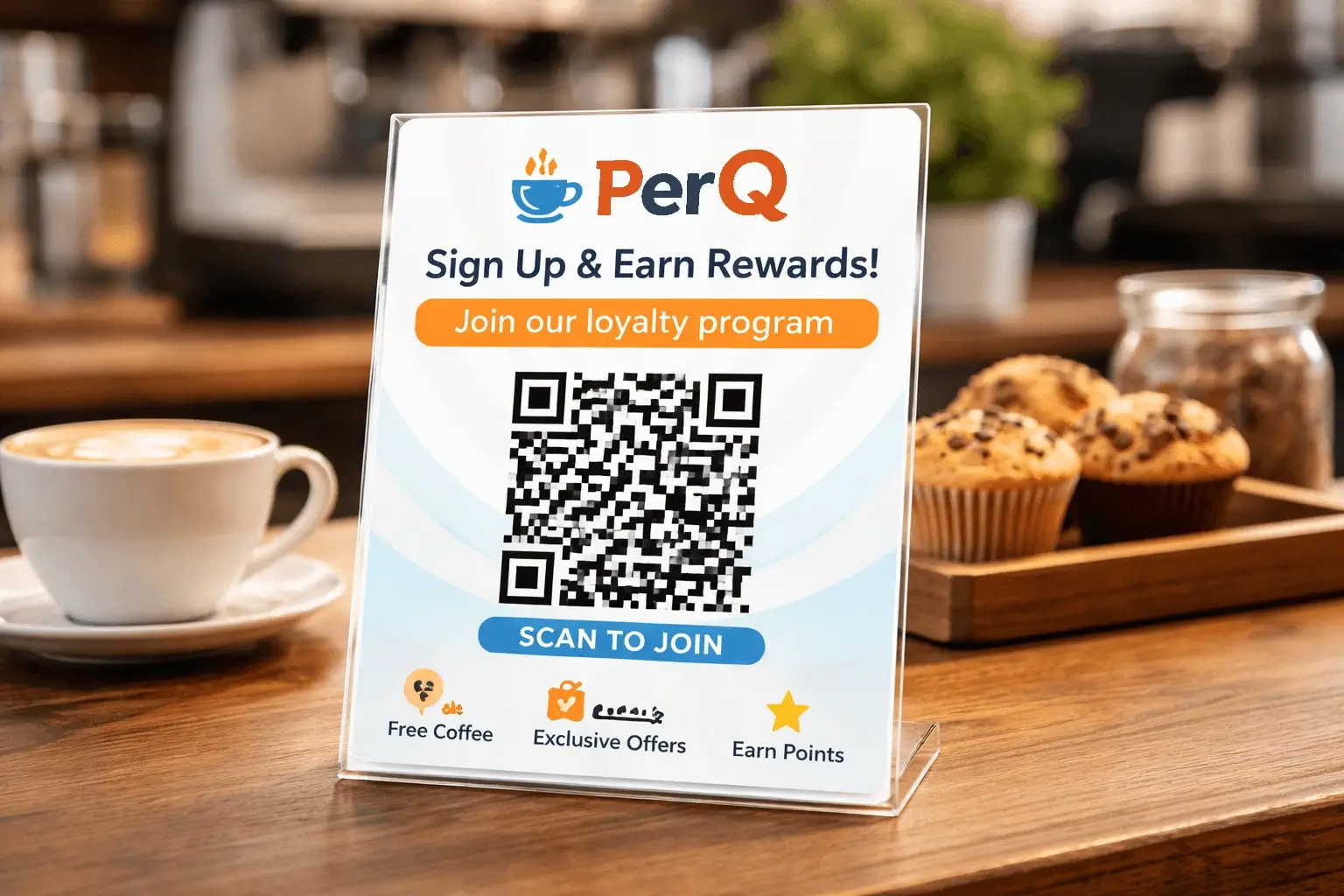
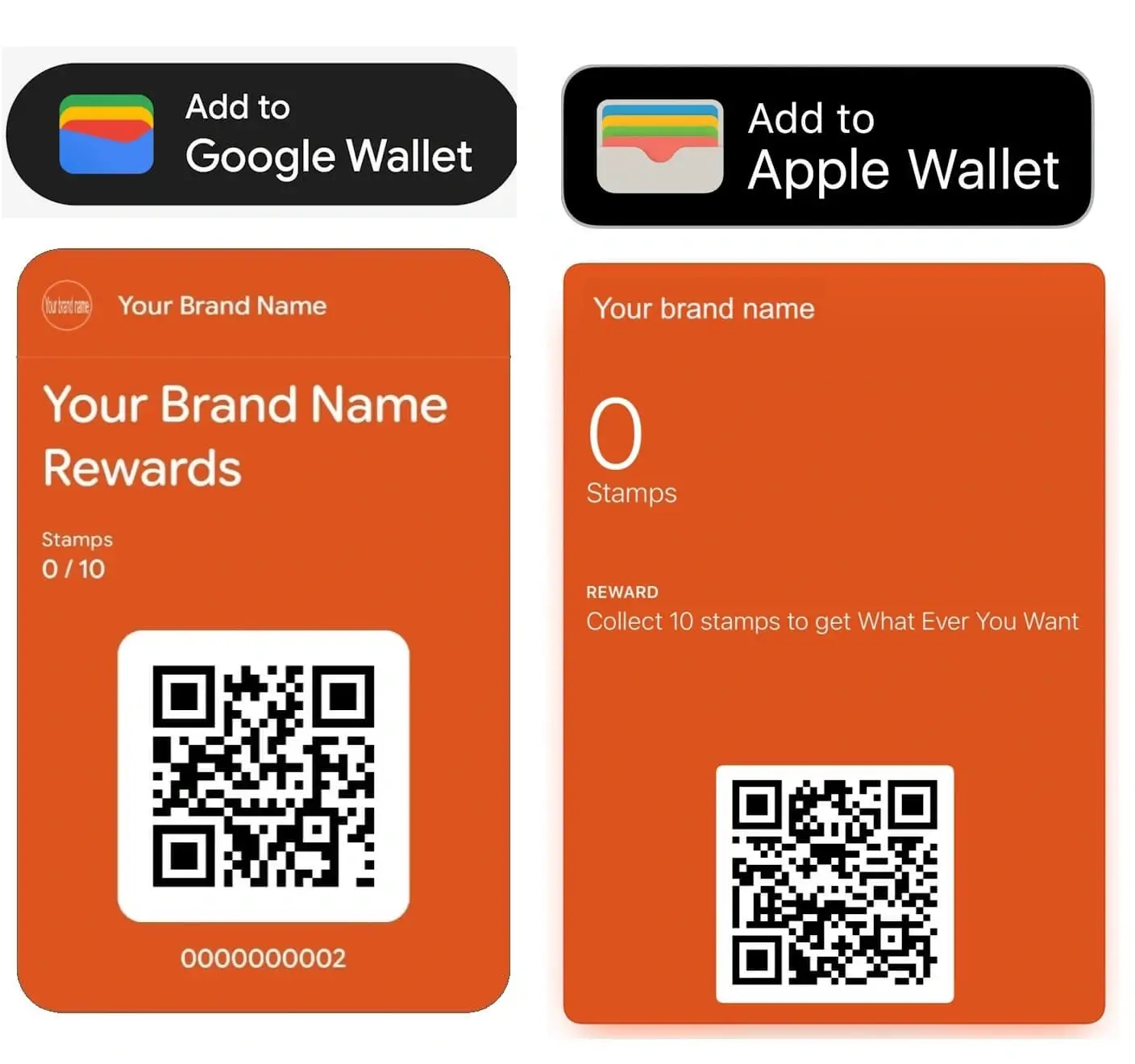
At Retail Geek we built PerQ specifically for independent cafés in the UK. It runs through Apple Wallet and Google Wallet. Customers scan a QR code at your counter, the digital stamp card saves straight to their phone, and that's it. No app download. No account to create. No password to remember. Stamps are added in seconds.
For a café owner, setup takes minutes. There's no hardware to buy and no technical knowledge needed. The monthly cost works out less than a decent bag of single origin beans. The card lives in the customer's phone wallet, the same place their bank cards and boarding passes live, so they actually use it.
The 30-day free trial means you can run it in your café before committing to anything. If it doesn't work for you, you've lost nothing except a few minutes setting it up.
Getting more regulars into an independent coffee shop isn't a mystery. Consistency keeps them coming back. A great product gives them a reason to choose you over the chain on the corner. Good service turns a transaction into something they want to repeat. And a digital loyalty scheme that builds you a customer database you actually own turns occasional visitors into a herd you can count on.