There is not one reason. That is the honest answer, and any blog post that tells you otherwise is selling you something.
Customers stop returning for different reasons, and the fix for each one is different. Getting this wrong is expensive. You can spend money on the wrong solution and see no improvement because you misdiagnosed the problem in the first place.
Here are the four real reasons and what to do about each one.
They Forgot
This is the most common reason and the most fixable. It is also the most frustrating, because it has nothing to do with anything you did wrong.
The customer enjoyed their visit. They meant to come back. Life got in the way. Three weeks passed. The habit never formed. They are not at a competitor. They are just not thinking about you.
This is not disloyalty. It is just how human memory works. We are all busy. We are all distracted. The businesses that stay front of mind are the ones with a mechanism for staying there.
For the big chains that mechanism is an app on your phone showing you exactly how many points you have and how close you are to a reward. For a local café it used to mean hoping a customer happened to remember you. It does not have to anymore.
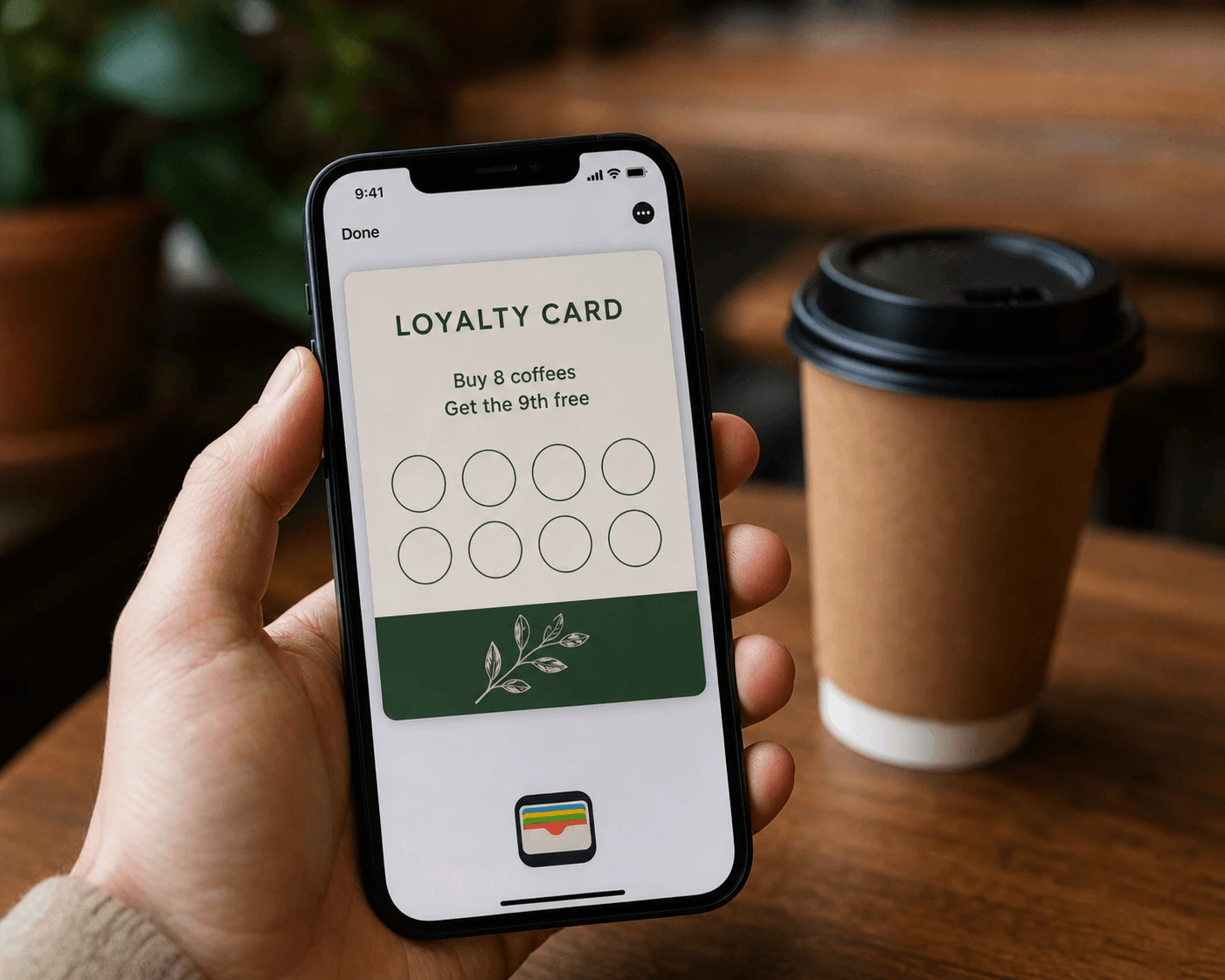
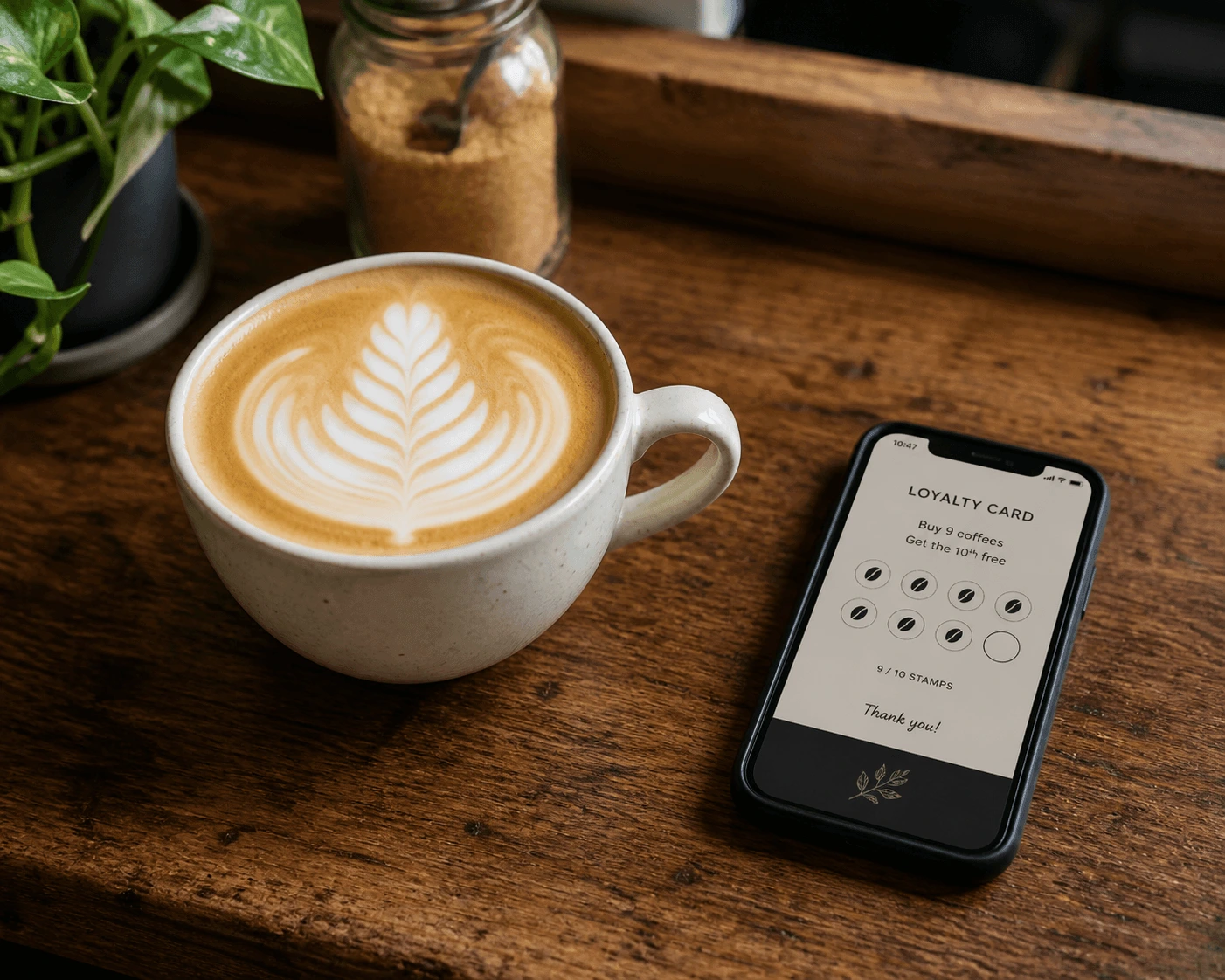
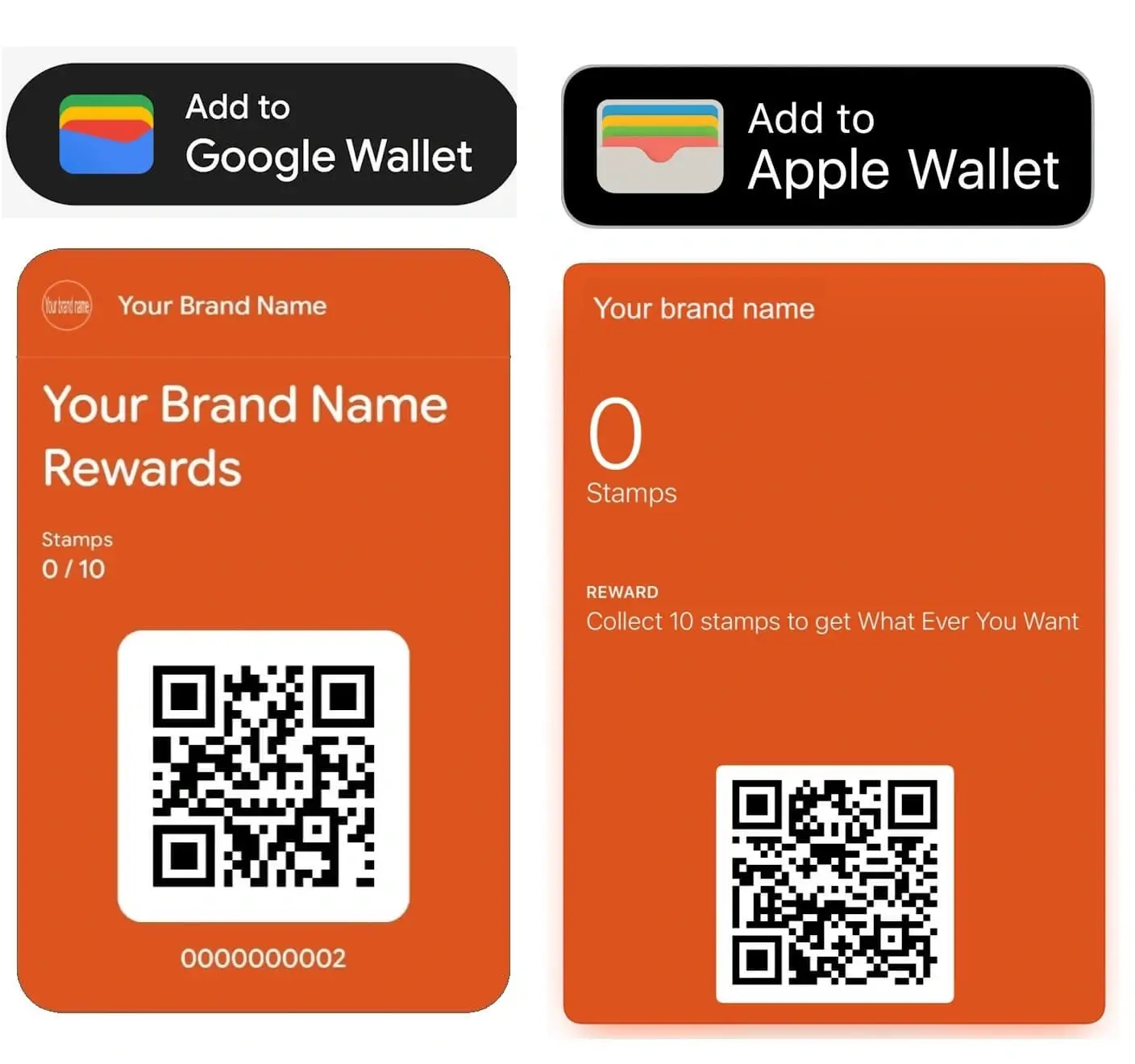
A digital loyalty card sitting in Apple Wallet or Google Wallet is a passive daily reminder. Every time a customer opens their wallet to pay for anything, your card is there. Their stamp count is visible. They are three stamps from a free coffee. That information alone is enough to make them choose you over the equally convenient alternative down the road.
Without it, you are relying on memory. Memory is unreliable. A loyalty card is not.
💡 The Forgetting Problem
A customer who forgets you existed is not a lost customer. They are an unreached one. A digital loyalty card in their wallet is the simplest possible mechanism for reaching them every single day, without doing anything.
It Was Not Convenient Enough
Convenience is underrated as a driver of repeat visits. People will tolerate a slightly worse coffee if it is closer, faster, or easier to get to. That is not a character flaw. It is just how people make decisions when they are busy.
At Shakes 2GO we knew this problem intimately. We were on a side street off the main pedestrian zone in Cheltenham. We did not have the passing trade that a high street unit gets handed for free. Every customer we had, we had to work for.
The first thing we did was make sure people could actually find us. Our leaflets included a small map with local landmarks. The Restoration pub next door, which had been there long enough that most people in town knew it. The Sainsbury's on the corner. We used what was around us rather than pretending the location did not matter. Our A-board did similar work, pulling people around from the high street and giving them a reason to make the short detour.
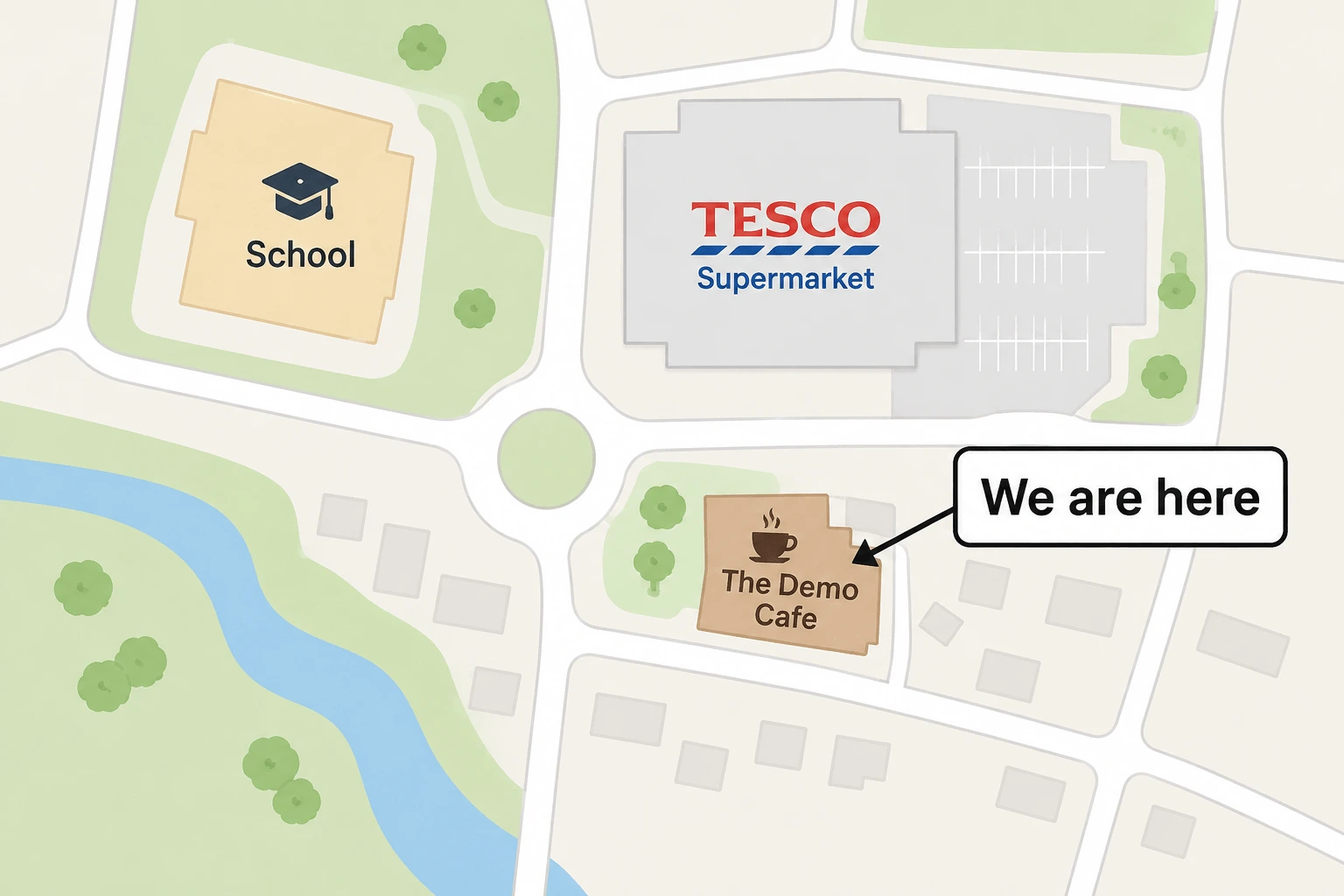
The lesson is not that a difficult location is fatal. It is that a difficult location requires more deliberate effort to overcome. If your café is not on the most obvious route, the quality of your product and your reputation for service needs to be strong enough to make the trip worth it. Your marketing needs to make finding you easy, not something a customer has to work out for themselves.
Opening hours are worth examining with the same honesty. Do they match when your customers actually want to come? A café that closes at 3pm loses every afternoon customer. One that does not open until 9am loses every early commuter.
But there is something worse than the wrong opening hours. That is having the right opening hours and not sticking to them.
After a busy Saturday at Shakes 2GO I would often walk around the corner to a deli nearby and buy the team sandwiches. They said they closed at 5.30pm. I was a regular. I spent £10 to £15 with them every Saturday, plus visits during the week. Good customer. Reliable revenue.
The problem was that at 5.15pm I would often arrive to find them mid-clean. They would serve me, but the body language of the staff made it clear I was an inconvenience. I kept going back because the food was good and the habit was established.
Then one Saturday I arrived at 5.20pm. Ten minutes before their stated closing time. They refused to serve me.
I never went back. Not once. A customer spending £10 to £15 every single week, gone permanently, over ten minutes.
If they wanted to finish service at 5pm to allow time to clean before 5.30pm, they should have said they closed at 5pm. That is a perfectly reasonable decision. What is not reasonable is displaying one closing time, behaving as though you close earlier, and then enforcing the earlier time on a regular who had no idea the rules had changed. Your opening hours are a promise. If you cannot keep that promise, change the hours.
Something Went Wrong and Nobody Fixed It
A bad experience does not always announce itself. Customers rarely complain directly. Most say nothing, leave, and quietly decide not to return. You never find out what happened.
The coffee was off one morning. A staff member was short with someone. The table was not clean. The order came out wrong and the apology felt dismissive. None of these is a catastrophe. But any one of them is enough to plant a seed of doubt. And doubt, for an independent café with plenty of competition nearby, is enough to make a customer try somewhere else next time and find they like it.
This is why mystery shoppers matter. Not as a way of catching staff out, but as a way of seeing your own business the way a new customer sees it. The things you have stopped noticing because you see them every day. The standard that slipped gradually without anyone marking the moment it changed.
Speed of service is part of this. A queue that does not move is a reason to try somewhere else. At Shakes 2GO we made a point of being upfront with customers at busy times about how long their milkshake would take. Milkshakes are made to order. They are not fast. Rather than let customers stand there getting quietly frustrated, we told them the wait before they decided. That gave them a choice. Most stayed. And the ones who stayed knew what to expect, which meant they were not checking their watch every thirty seconds.
We also made a point of making eye contact and smiling with customers before they had even made it through the door. At peak times the shop could look completely full, which from the outside might suggest a long wait. Often it was not, because everyone inside had already been served. A smile and a wave from behind the counter cost nothing and stopped people turning around before they had come in.
How you handle things when they do go wrong matters just as much as the problem itself. A customer who complains and gets a fast, genuine response often ends up more loyal than one who never had a problem. The ones who silently leave are the ones to worry about. You cannot fix a problem you do not know exists.
💡 The Silent Walkout
Most unhappy customers say nothing to your face. They just stop coming. The complaint you never hear is the most expensive one because you have no chance to fix it.
You Were Unmemorable
This is the hardest one to hear. Not because it implies failure. But because it implies ordinariness, which feels almost worse.
The customer came in. The coffee was fine. The service was fine. Nothing went wrong. Nothing stood out. They left and thought nothing in particular. The next time they needed a coffee they picked wherever was convenient, and the choice of whether that was you or somewhere else was essentially random.
Unmemorable businesses lose customers not through a single moment but through an accumulation of adequacy. There is no obvious problem to fix. Just a slow drift toward irrelevance.
The fix is not complicated but it requires honesty. What is the thing about your café that someone would mention to a friend? If you cannot answer that quickly, your customers probably cannot either.
It might be a specific product nobody else does. A particular atmosphere. A member of staff everyone loves. Something so unusual that people feel compelled to tell someone about it.
At Shakes 2GO we sold a Marmite milkshake. Not because we expected it to be a bestseller, though it sold better than you might think. It was the kind of thing people talked about. You either loved the idea or you were horrified by it. Either reaction got us mentioned.
Rory Bremner came in one afternoon with his daughter. He enjoyed it enough to tweet about the experience. Then he tweeted again, specifically about the Marmite milkshake. Two tweets from someone with a significant following, because we had one product unusual enough to be worth mentioning.
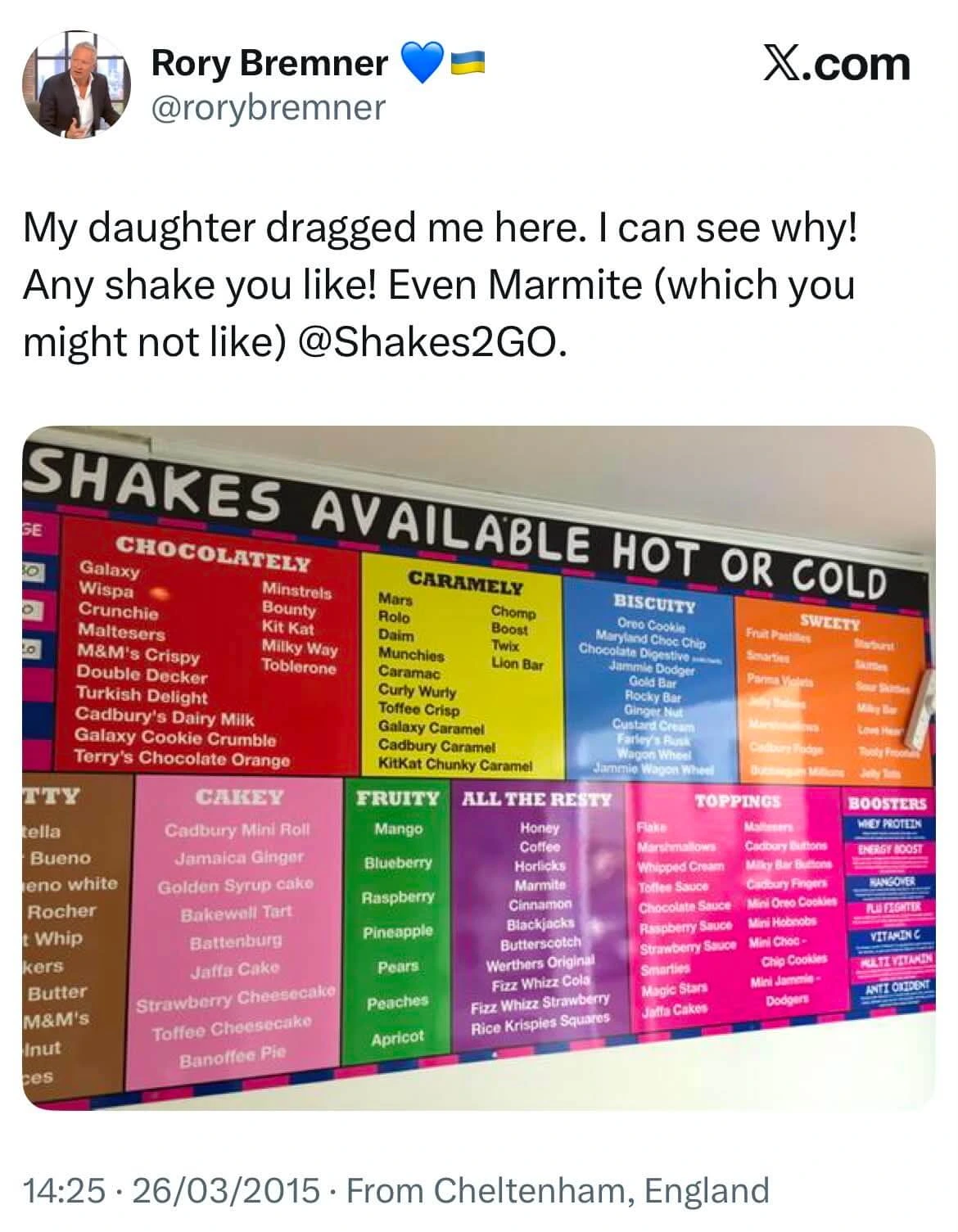
You do not need a gimmick. But you do need something. A visit to your café should leave the customer with at least one thing worth saying to the next person they see.
Independents have a real advantage over chains on this front. A chain is consistent but rarely memorable. An independent can be both, and the ones that are tend not to have a problem with customers not returning.
The Common Thread
Three of these four reasons have the same solution sitting underneath them: a customer database.
A customer who forgot you can be reminded. A customer who had a bad experience can be identified when their visits stop, if you have a way of knowing they have stopped. A customer who found you unmemorable can be given a reason to come back through a text about an event, a new seasonal menu, a barista coffee training course on a Saturday morning with eight seats left.
None of that is possible if you do not know who your customers are. Paper stamp cards do not tell you. A digital loyalty scheme does.
The fourth reason, inconvenience, is the one a database cannot fix on its own. But even here it helps. If your location is not the most obvious choice, the strength of your customer relationships is what keeps people making the deliberate decision to come to you rather than defaulting to whoever is nearest. A customer who has six stamps and is two away from a free drink is far more likely to make the extra effort than one with no particular tie to you at all.
Start with the three you can fix. Most cafés that are losing customers quietly are losing them to forgetting, not to failure.
Frequently Asked Questions
Why do customers not return to a café after their first visit?
Usually one of four things: they forgot, somewhere else became more convenient, something went wrong and put them off, or the experience was not distinctive enough to make them choose you next time. The most common is simply that nothing pulled them back. A digital loyalty card in their wallet deals with that directly.
How do I find out why customers are not coming back?
Mystery shoppers are the most reliable way to surface problems you are not seeing. A trusted friend or family member working through a checklist will tell you more than any amount of guessing. A digital loyalty system also shows you when regular customers stop visiting, which at least tells you something has changed even if it cannot tell you why.
Does a loyalty card actually stop customers drifting to competitors?
It reduces the likelihood. A stamp card visible in a customer's wallet every day creates a pull that has nothing to do with advertising. The customer is invested in finishing it. People change their behaviour to complete something they have already started, even something as simple as a stamp card with a few stamps already on it.