Think about the last time you were looking for somewhere to eat abroad. You didn't know the area. You had no recommendations. You were just walking down a street, hungry, looking at options. How did you decide?
You looked at the outside. You made a snap judgement — probably in under three seconds — about whether the place looked worth walking into. The menu you couldn't quite read from the street. The windows that needed a clean. The paint that was starting to peel. The chairs stacked outside in a way that somehow said "we don't really care." You moved on without a second thought, and went somewhere that looked like it wanted your custom.
That same thing is happening outside your café. Every day.
People who've never been in before are walking past, glancing over, and making a decision. Some of them are coming in. Some of them are walking straight past and giving their money to whoever is next. The difference — in many cases — isn't your coffee, your menu, or your prices. It's what they see from the pavement before they've had any chance to experience any of those things.
Estate agents have a word for this. They call it kerb appeal. When you're selling a house, the estate agent will tell you before anything else: tidy the front garden, repaint the door, power-wash the path. Not because those things change what the house is, but because they change whether people want to walk through the door at all. A buyer who doesn't bother viewing won't become a buyer.
Your café works exactly the same way.
The First Job Interview Principle
Cast your mind back to your first job interview. You'd probably never met the person interviewing you. They knew nothing about you. And yet — unless you're unusual — you turned up in your best clothes, shoes cleaned, hair done. You understood, instinctively, that the impression you made in the first few seconds would shape everything that followed.
You were right. Research consistently shows that people form strong first impressions within seconds of meeting someone, and that those impressions are remarkably hard to shift. The same principle applies to your business. Someone walking past and glancing at your shopfront forms an opinion faster than they can consciously process it. If that opinion is negative — or just neutral — they keep walking.
The good news is that, just like dressing well for an interview, making a strong visual first impression is largely within your control. It doesn't require a major refurbishment or a big budget. It requires attention, consistency, and a willingness to see your business the way a stranger on the street sees it.
Step Outside and Actually Look
The first thing to do is deceptively simple: go and stand on the other side of the street and look at your own café.
Most business owners stop really seeing their own premises after a few months. You walk in and out every day, you stop noticing the things that have gradually accumulated — the sign that's faded slightly, the window that's developed a persistent haze, the welcome mat that's seen better days. A customer walking past for the first time sees all of it, with fresh eyes, and forms a judgement accordingly.
So stand across the road. Look at it like a stranger would. Ask yourself honestly: does this place look like somewhere I'd want to spend money?
The Basics: What You Can Fix This Week
You'd be surprised how much of the work is just maintenance. Not expensive. Not complicated. Just done.
Windows. Clean windows might be the single biggest visual upgrade you can make for almost no cost. Dirty windows do two things: they make the inside look unwelcoming, and they signal neglect. Clean them regularly — more often than you think is necessary. One useful trick if you're dealing with persistent condensation haze on the inside: apply washing-up liquid directly to the glass with a cloth, work it in, then buff it off. It cuts through the greasy film that builds up over time and leaves the glass genuinely clear rather than just streak-free.
Signage. Your signs should be clean, well-lit, and legible from a reasonable distance. If a sign has faded, cracked, or started peeling, it communicates exactly the wrong thing — not just about the sign, but about the business behind it. Replace or repaint before it gets to that point, not after.
The pavement. Sweep it. Every morning, before you open. The area directly in front of your premises is your territory, and it should look like you take ownership of it. Pay particular attention to anything unpleasant — bird mess, dog mess — that customers would have to step around or over to get to your door. It sounds obvious. You'd be amazed how many businesses let it slide.
The welcome mat. One of the most overlooked details. A worn-out, dirty welcome mat is the last thing a customer sees before they cross your threshold. It sets the tone for everything inside. Replace it when it starts to look tired — they're not expensive, and a clean, presentable mat signals that you care about the details.
A-boards and outdoor furniture. If you have a pavement board, make sure it's current, clean, and properly positioned. Handwritten boards can be charming if the writing is good; they look chaotic if it isn't. Outdoor furniture should be wiped down before service every day — tables and chairs that are clean and neatly arranged look inviting. Tables with yesterday's crumbs and chairs pushed out at odd angles do not.
💡 The ten-minute morning routine
Sweep the pavement, wipe down outdoor furniture, check the windows for obvious marks, straighten the A-board. Ten minutes before you open every morning, and your shopfront consistently looks like a business that's on top of things.
Colour: Bold Is Better Than Beige
If you're repainting — or planning to — don't be afraid of colour. The independent businesses that stand out on a high street are almost always the ones that have made a deliberate, confident colour choice. The ones that blend into the background have usually played it safe, and playing it safe is the same as being invisible.
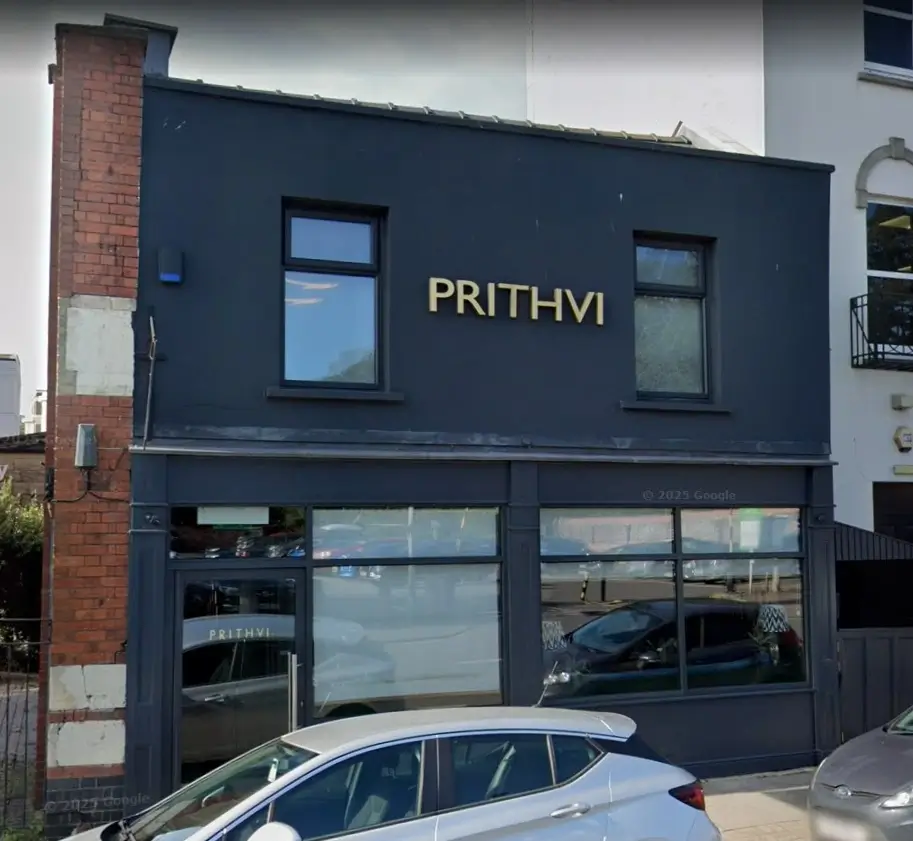
You can go two ways with this. Deep, rich colours — dark greens, navy blues, deep burgundies — can look extraordinarily smart and considered. Done well, they signal quality and intention in a way that a standard magnolia frontage never will. There's a restaurant near me called Prithvi that does exactly this: dark, confident exterior, immediate impression of quality. You notice it. You want to know what's inside.
Or you can go the other direction and own something bright and distinctive. When I ran Shakes 2GO, we went bold — bright, high-visibility colours that were unmissable from down the street. You couldn't walk past without registering it. That visibility translated directly into footfall from people who might otherwise have walked straight past without noticing we were there. The colour did the advertising.
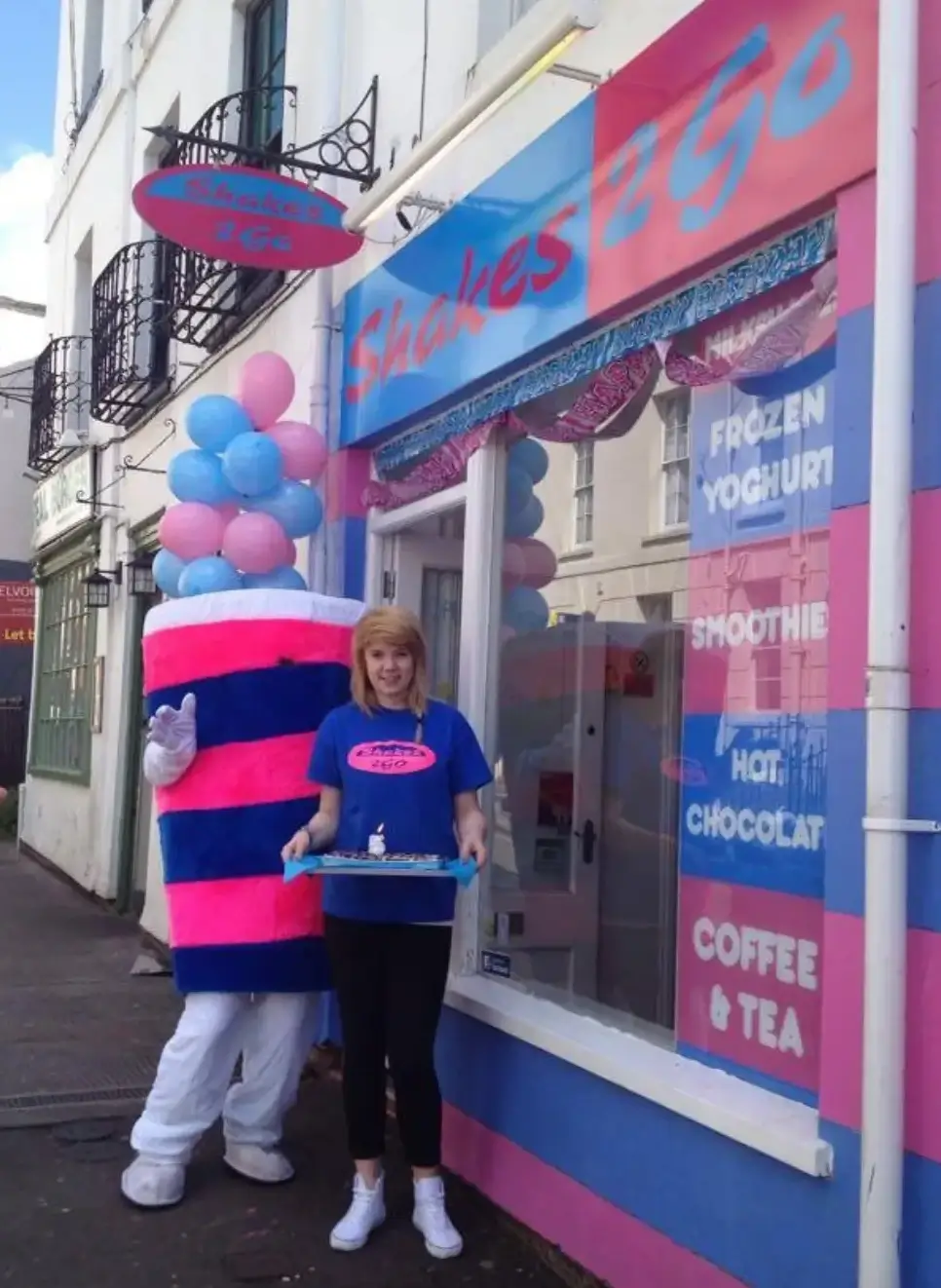
Neither approach is universally right. It depends on your brand, your location, and who your customers are. But both of those options beat the forgettable middle ground. Whatever colour you choose, commit to it and keep it fresh. Paint that's been there for five years and is starting to weather makes your premises look like no one is paying attention.
The Human First Impression: Your Staff at the Door
All of the above is about the static first impression — what someone sees when your business is a picture on the wall. But there's a second first impression, and it's more powerful: the human one.
The moment someone crosses your threshold, they form an instant read of the room. Are staff engaged and warm, or are they staring at their phones? Does someone make eye contact and say hello, or does the customer stand there for an awkward moment feeling invisible? Is the energy in the room welcoming, or indifferent?
A genuine greeting — eye contact, a real smile, a hello — costs nothing and changes everything. It's the thing that takes a customer from "this seems okay" to "I like it here." It's the thing that makes someone who was just passing into someone who becomes a regular.
The challenge is making it consistent, because it depends on people and people have off days. The way to make it consistent is to make it explicit. Don't assume your team know that greeting every customer warmly is the expectation — tell them, show them, and create an environment where it's the norm rather than the exception. New staff should understand from day one that a proper welcome is part of the job, not an optional extra.
At Shakes 2GO, this was something we talked about explicitly in the team. The staff who were genuinely warm and enthusiastic with customers weren't just better at customer service — they generated more spend, better reviews, and more word-of-mouth. The connection between a warm welcome and revenue is direct, even if it's hard to put a precise number on it.
💡 A simple test
Send a friend or family member into your café when you're not there — someone your staff won't recognise. Ask them to report back on whether they were greeted when they came in, and what the general atmosphere felt like. You might be surprised by the gap between what you think happens and what actually happens when you're not watching.
Putting It Together
None of this is complicated. That's partly the point — these are things that are entirely within your control, require very little money, and compound over time. A shopfront that's consistently well-presented and a team that consistently gives a warm welcome will, week after week, convert more passersby into customers than one that lets these things slide.
The businesses that do this well don't do it because they have bigger budgets. They do it because someone in the business has made it a non-negotiable standard. They've decided that the outside of their premises and the first words their customers hear matter, and they act accordingly.
That decision is available to you right now. Start with the ten-minute morning routine, have a conversation with your team about greetings, and go and stand across the road and look at your business like a stranger. What you see will tell you everything you need to know.
Once you've got them through the door and they've had a great experience, the next challenge is making sure they come back. That's where a proper loyalty programme pays for itself — but that's a conversation for another post.