Putting your prices up is one of the most anxiety-inducing things you can do as an independent retailer. You've spent years building trust with your customers. You know them by name. You know what they order. And now you have to tell them that the flat white is going up by 20p.
The fear is understandable. But in most cases it's significantly worse in your head than it turns out to be in reality. I've done it. Your competitors have done it. The lesson is almost always the same: loyal customers understand, occasional customers barely notice, and the handful who kick up a fuss were probably never your most valuable regulars anyway.
Here's how to do it properly.
First: Get Your Head Straight About Pricing
Before we talk tactics, let's talk mindset. A lot of independent retailers are genuinely undercharging, and have been for years, out of a fear of putting customers off.
Your prices need to cover your costs, pay your staff fairly, and leave enough margin to run and grow a sustainable business. If they don't do those three things, you're not running a viable business. You're subsidising your customers' coffee habit out of your own pocket. That's not noble. It's a slow route to closing down.
Customers who genuinely value what you do will pay a fair price for it. Customers who are only there because you're the cheapest option within walking distance are not your loyal customers. They're price shoppers. They'll leave the moment someone cheaper appears regardless of whether you raise your prices or not.
💡 The Real Risk of Undercharging
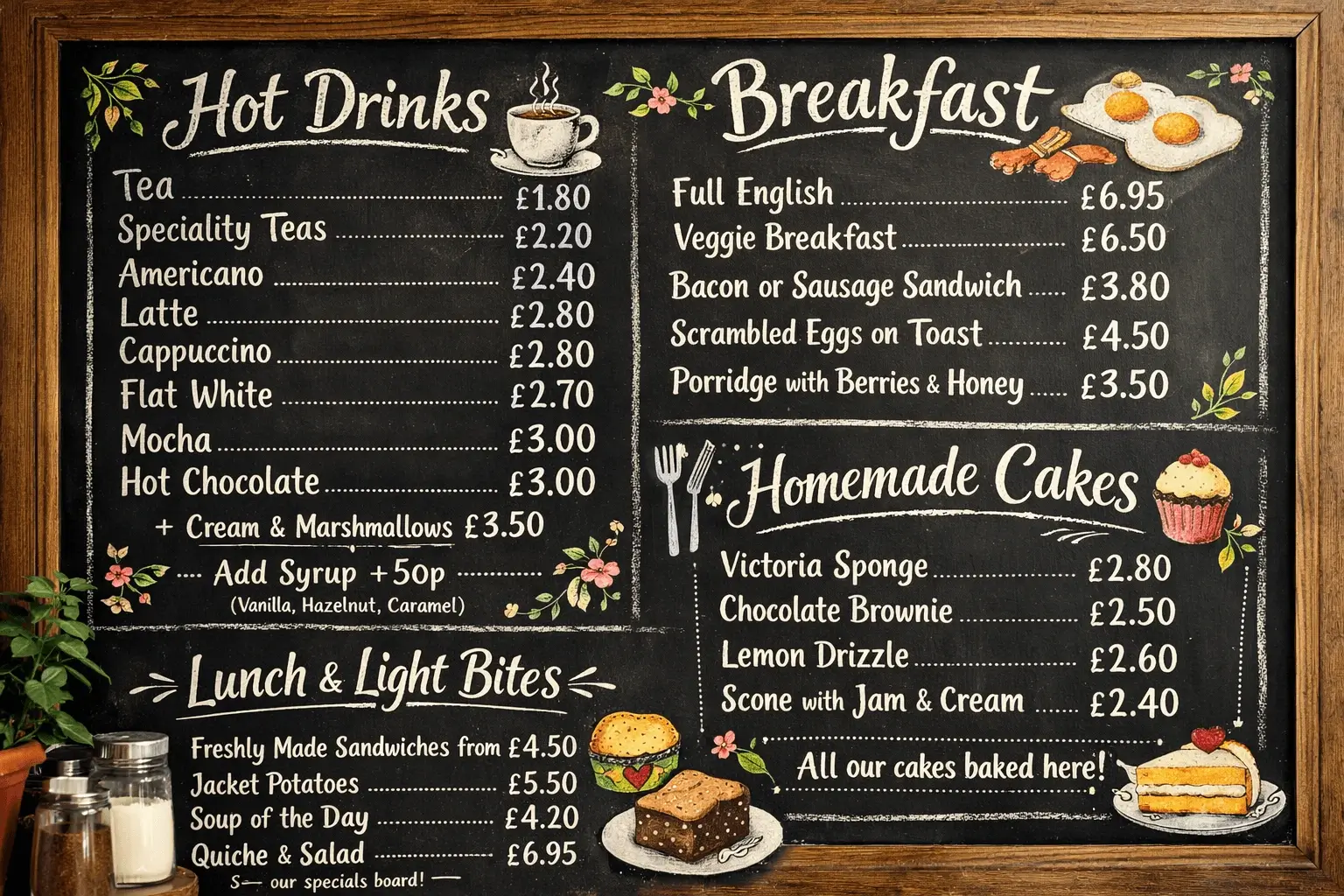
Keeping prices artificially low doesn't build loyalty. It attracts price sensitivity. The customers who love your place, your team, and your product will stay when your flat white goes from £3.20 to £3.40. The ones who leave over 20p were never really yours.
1. Know Your Numbers Before You Move
Don't raise prices based on a general feeling that costs have gone up. Know exactly what your margins are on each product, what your actual cost base looks like, and what you need to charge to run a healthy business.
It sounds obvious but a surprising number of independent café owners have never done a proper margin calculation on their most popular products. If your flat white costs you £1.10 to make and you're selling it for £3.00, your margin is roughly 63%. A 60% gross profit on food and drinks in cafés is normal. If your rent, staffing, and overheads require more than that to stay viable, you need to know before you decide on an increase.
If you're VAT registered, remember that 20% of your price goes straight to the government. And don't forget that milk-based drinks like milkshakes and iced lattes are zero-rated for VAT on takeaway orders.
Do the numbers first. Then decide on the increase. In that order.
2. Go Gradual, Not Dramatic
A 50p jump on your most popular item will generate complaints. A 15p increase followed by another 10p six months later will barely register. The total increase over a year might be the same but the psychological impact is completely different. Little and often beats large and infrequent every time.
Customers calibrate to prices over time. A price they see every day becomes normalised. A sudden large jump breaks that normalisation and triggers a reaction. Small incremental increases give people time to adjust without ever feeling like they've been hit with something unexpected.
If you've been putting off a price increase for a long time and the gap between your current prices and where they need to be is significant, don't try to close it in one go. Break it into two or three stages over 12 to 18 months. You'll get to the right price point without the drama of a single large jump.
Also: avoid raising prices immediately before or after something that's already put customers in a bad mood. A menu change they weren't happy about, a period of service problems, anything that's already tested their goodwill. Time your increases for periods when things are going well and customers are feeling positive about you.
3. Be Honest With Your Regulars
For significant increases, particularly if you have customers who come in daily and will notice immediately, a brief honest explanation goes a long way. You don't need to produce a detailed breakdown of your finances. You just need to acknowledge it.
"Just to let you know, we're putting our prices up slightly from next week. Energy bills and ingredient costs have hit us hard this year. We've held off as long as we could." That's it. Most people understand. Most people have seen their own bills go up. A brief human acknowledgement of something real is infinitely better than a silent change that customers feel deceived by when they notice it.
Don't apologise excessively. Don't justify every penny. Be matter-of-fact about it, say it's something you've had to do, and move on. The customers who respect you will respect the honesty.
4. Add Value at the Same Time
If you're raising prices, give customers something to point to as a reason. A menu refresh, a new seasonal special, an improved ingredient, better packaging, a new seating area. Something that signals forward momentum rather than just "things cost more now."
This isn't manipulation. It's framing. A price increase alongside visible improvement feels like natural evolution. A price increase with nothing else changing feels like a squeeze. Even small improvements — a new cake supplier, a better coffee bean, smarter cups — give customers a positive story to tell themselves about why they're happy paying a bit more.
5. Hold Your Nerve
Someone will complain. Almost certainly. There will be one customer, usually a very vocal one, who makes a point of telling you they're not happy. Possibly in front of other customers.
Don't fold. Don't offer them a discount to keep them quiet. Don't immediately revert the increase because one person grumbled.
Acknowledge their concern calmly. "I completely understand, it's frustrating when prices change, and we held off as long as we could." Then leave it there. If they leave, they leave. In my experience, the customers who make the most noise about price increases are rarely your most loyal or most valuable regulars. The people who truly love your place just quietly keep coming back at whatever the price is. Because that's what loyalty actually looks like.
💡 One More Thing
Update your Google listing, your website menu, and any third-party delivery platforms at the same time you update your in-store pricing. Customers who see different prices in different places don't just get annoyed. They feel deceived. Consistency matters.
The Bottom Line
Raising prices is not something to be ashamed of. It's a normal part of running a sustainable business. Done thoughtfully, with honest communication, gradual implementation, and a clear sense of your own value, it almost never causes the customer exodus that retailers fear.
What does cause customers to leave is a business that's cutting corners, getting worse, and clearly struggling. A business that's confident in its prices, open about why they've changed, and continuing to deliver a great experience? That's a business worth paying a bit more for.